
The Vietnamese phin filter is one of the most iconic brewing tools in Vietnamese coffee culture, and if you’re discovering Vietnamese coffee for the first time, understanding the phin is a great place to start. Beyond choosing quality beans, knowing the different types of phin filters and how each one works will help you brew a truly authentic cup at home.
In this guide, we’ll walk you through every major type of Vietnamese coffee filter, the pros and cons of each, and what to look for when buying one, so you can confidently choose the phin that fits your needs.
The Vietnamese phin filter: What you should know
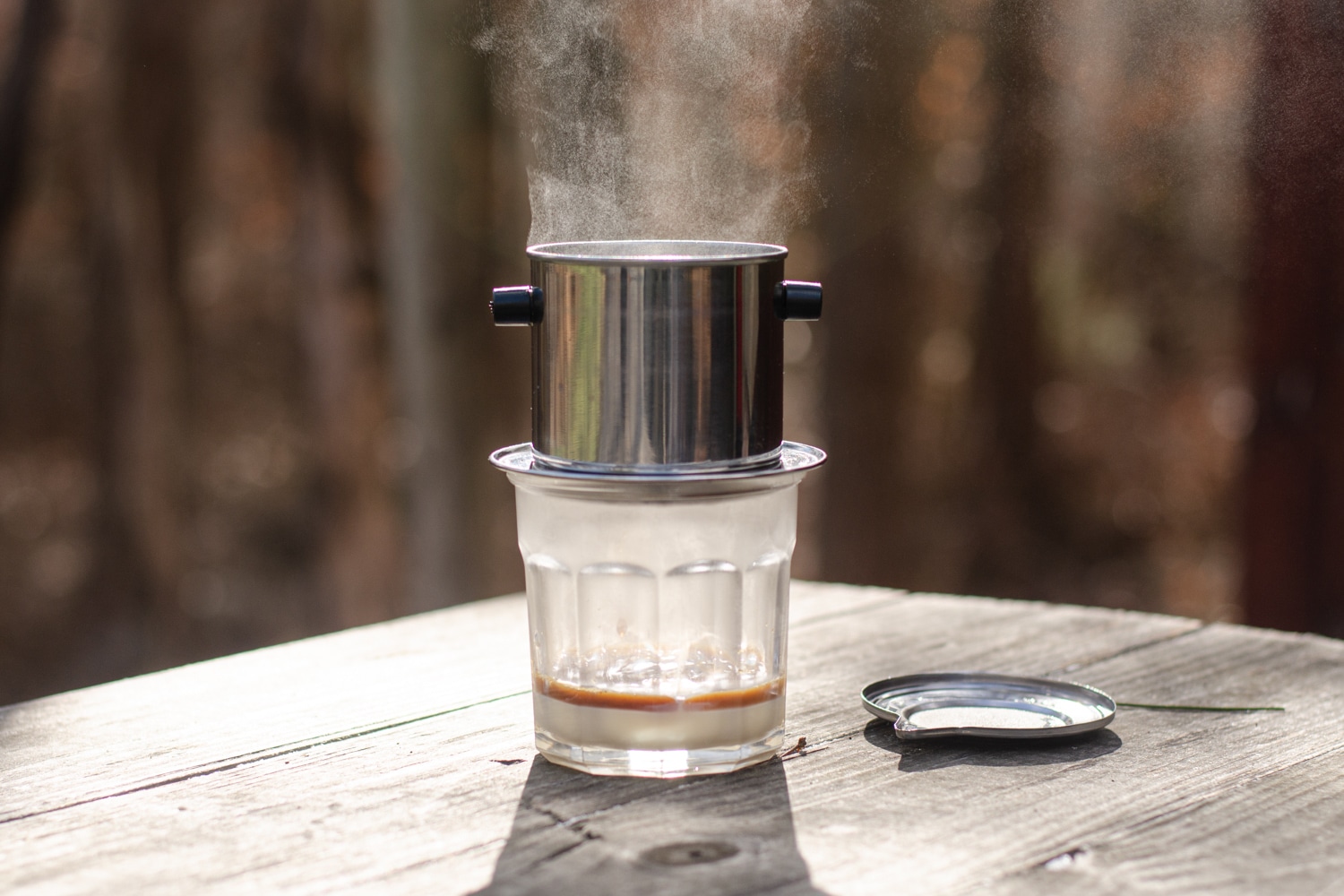
The origins of the Vietnamese phin filter
The phin filter arrived in Vietnam around the 19th century, introduced alongside coffee cultivation during the French colonial period. Over time, this simple Vietnamese drip coffee tool became a deeply embedded symbol of local coffee culture: a daily ritual as much as a brewing method.
As for its earlier origins, one theory traces the phin back to the 1660s in South India, where a similar device known as the Madras Coffee Filter was used. That device shares quite a few similarities with the Vietnamese phin we know today.
How a Vietnamese phin filter is constructed
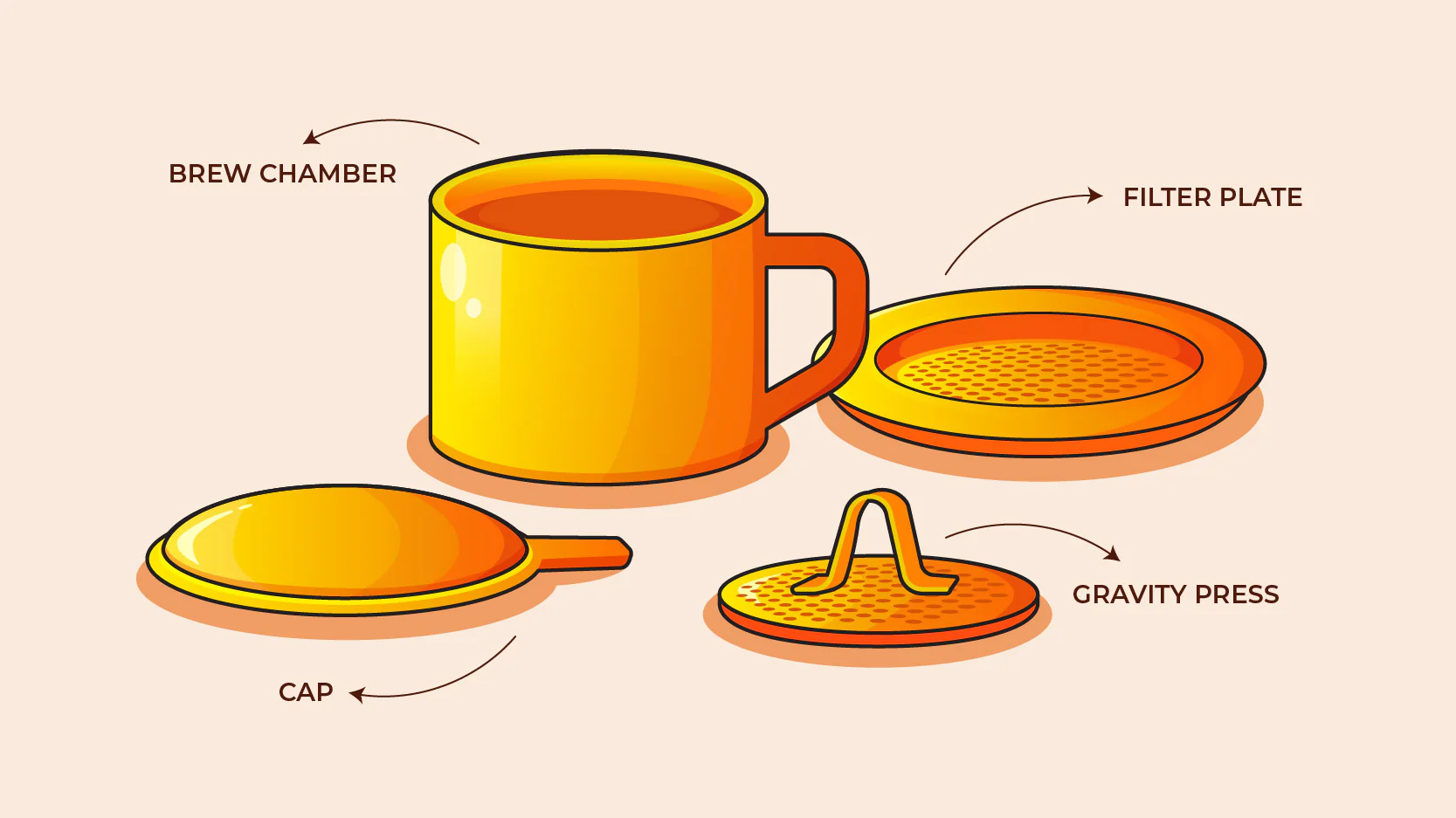
A Vietnamese coffee filter is made up of four key components: the brewing chamber (body), the press insert (spreader plate), the bottom filter plate, and the lid. A well-made phin should meet the following criteria:
- The number of holes in both the press insert and the bottom filter plate should be equal and evenly distributed.
- The hole size must be compatible with the grind size of your roasted coffee.
- A properly functioning phin should allow approximately 50 to 60 drops of coffee to drip through per minute.
- The lid must fit snugly to retain heat throughout the brew.
- The holes on the press insert should be more densely packed than those on the body and bottom filter plate, so water spreads evenly over the coffee grounds.
Types of Vietnamese phin filter
Phin filters come in a wide variety of materials, each with its own brewing characteristics. Here is a detailed look at each type:
Stainless steel phin filter
Pros of the stainless steel phin
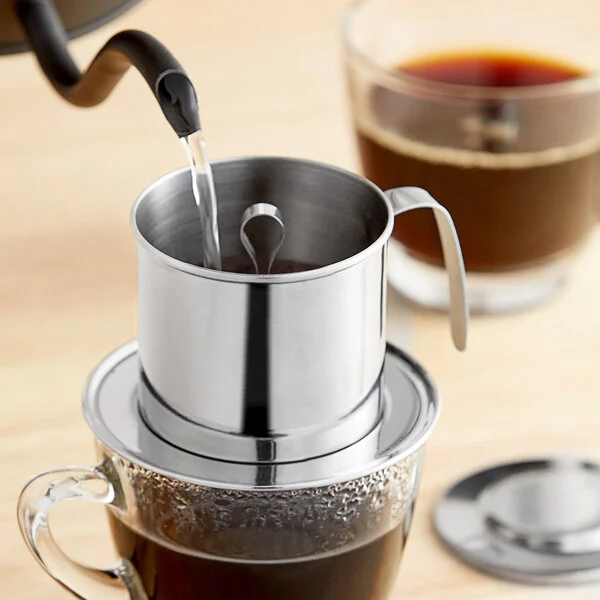
The stainless steel phin filter is by far the most widely used type today, and for good reason. It typically features a threaded press insert that lets you control how tightly the coffee grounds are compressed. Simply turn the screw clockwise to increase pressure. This gives you more control over brew strength and flow rate, making it a popular choice for both beginners and experienced home brewers.
Some stainless steel models use a gravity press instead of a screw, but the press plate is heavy enough to compress the grounds and prevent overflow when hot water is added.
Being made of stainless steel also means excellent durability, easy cleaning, and no risk of rust or surface discoloration. It is a reliable, long-lasting Vietnamese coffee maker for everyday use.
Cons of the stainless steel phin
Experienced baristas note that stainless steel phins can sometimes fall short on aroma depth. Because the metal absorbs heat from the hot water, the brew temperature can drop slightly during extraction, which may result in a less bold or complex cup compared to other materials.
Stainless steel phins also tend to sit at a higher price point. If you are stocking a café with multiple filters, the cost can add up.
Aluminum phin filter

Pros of the aluminum phin
A market staple for decades, the aluminum phin filter remains a favourite for brewing traditional Vietnamese drip coffee. Its standout advantage is heat retention. Aluminum holds temperature better than stainless steel, which allows for a richer, more aromatic extraction.
Aluminum phins are also very affordable, making them an ideal option for cafés catering to budget-conscious customers, or anyone who needs several phins without a heavy upfront investment.
Cons of the aluminum phin
The press plate on most aluminum phins is quite lightweight, which means the grounds can overflow when hot water is added too quickly. To avoid this, pour a small amount of water first, let the grounds bloom and absorb it for 1 to 2 minutes, then continue filling the chamber.
Ceramic phin filter
Pros of the ceramic phin
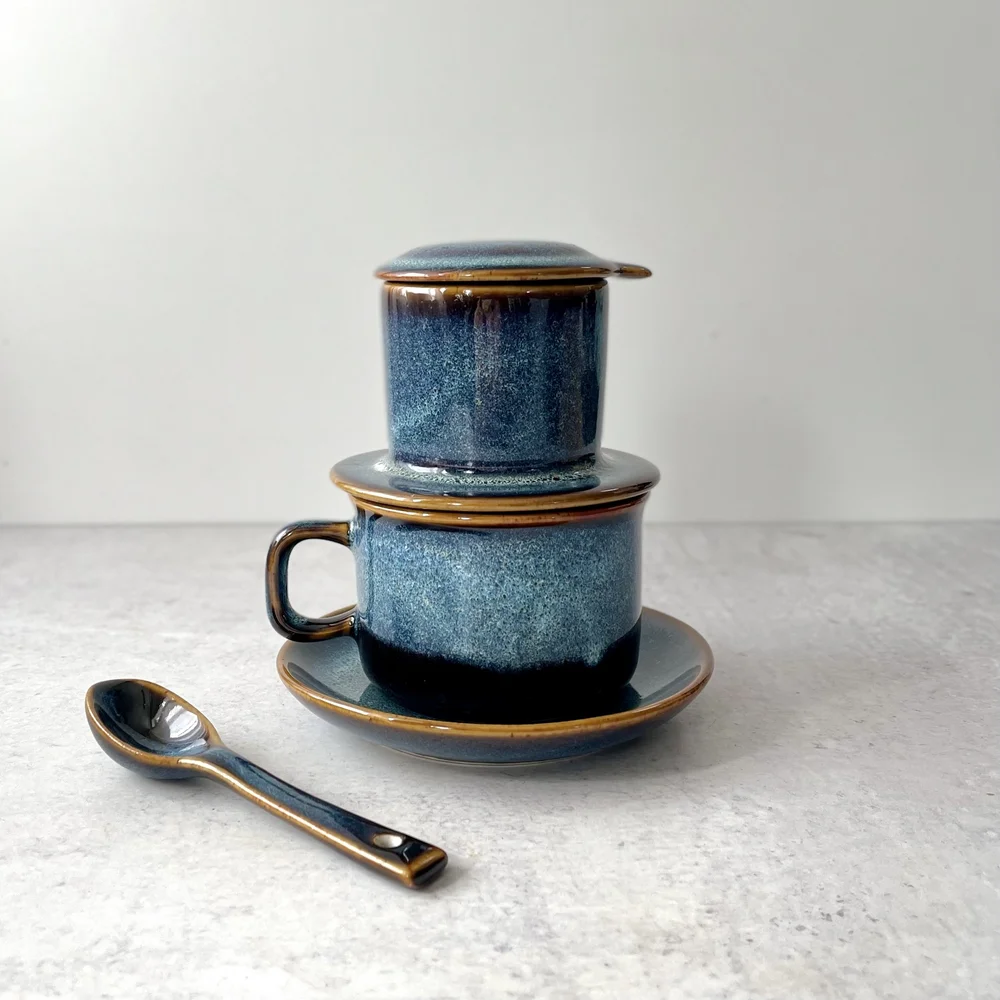
Visually striking, ceramic phin filters are hard to ignore. They serve a dual purpose as a functional brewing tool and a decorative piece, and they have grown steadily in popularity as a result. Beautiful ceramic phins are widely available and easy to find online or in specialty stores.
Beyond looks, ceramic is an eco-friendly and health-safe material. Its thick walls also provide excellent heat retention, which helps keep the brew at the right temperature for a fuller, more flavourful extraction.
Cons of the ceramic phin
Due to the nature of fired clay, it is very difficult to achieve uniformly small and perfectly round holes in a ceramic phin. As a result, most ceramic phins produce less consistent flow, which is why serious coffee enthusiasts tend to avoid them for daily brewing.
Ceramic phins are also quite expensive, placing them more in the collector’s item or decorative category than as an everyday Vietnamese coffee filter.
Plastic phin filter
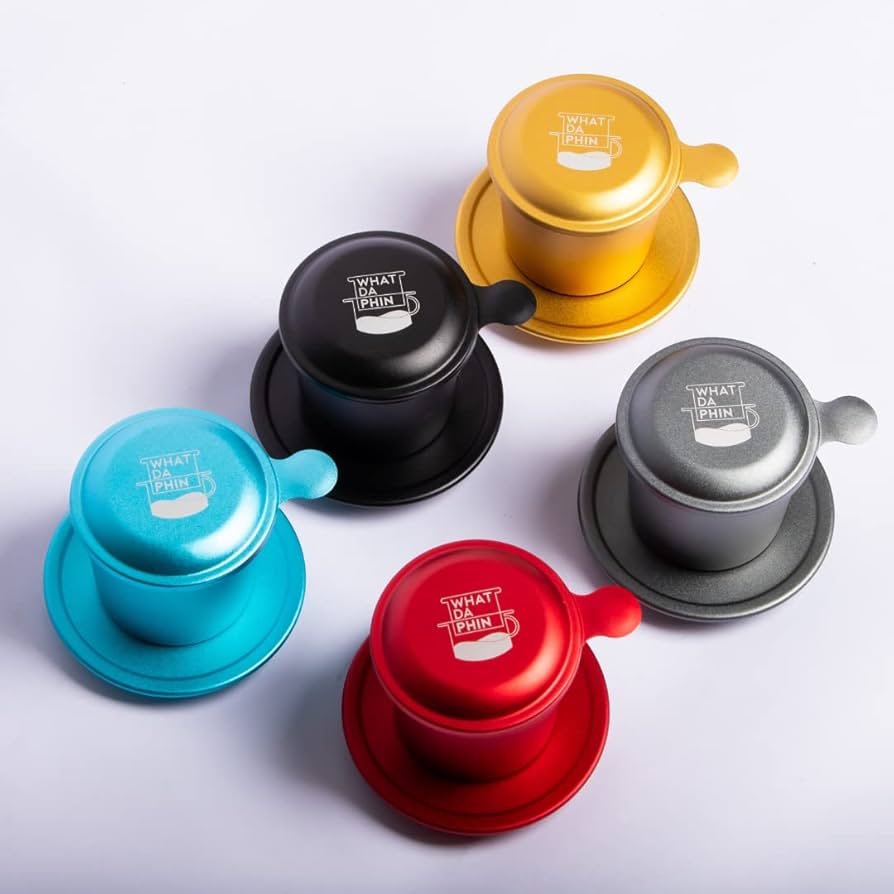
Low price and reasonable durability are the main draws of the plastic phin. However, there are real health concerns worth considering. Plastic in contact with boiling water can leach chemicals, which is something to keep in mind if you brew multiple cups a day.
Plastic phins also tend to discolour and yellow over time, losing their visual appeal relatively quickly. We would recommend thinking carefully before choosing plastic for long-term use.
Ion color-coated aluminum phin filter
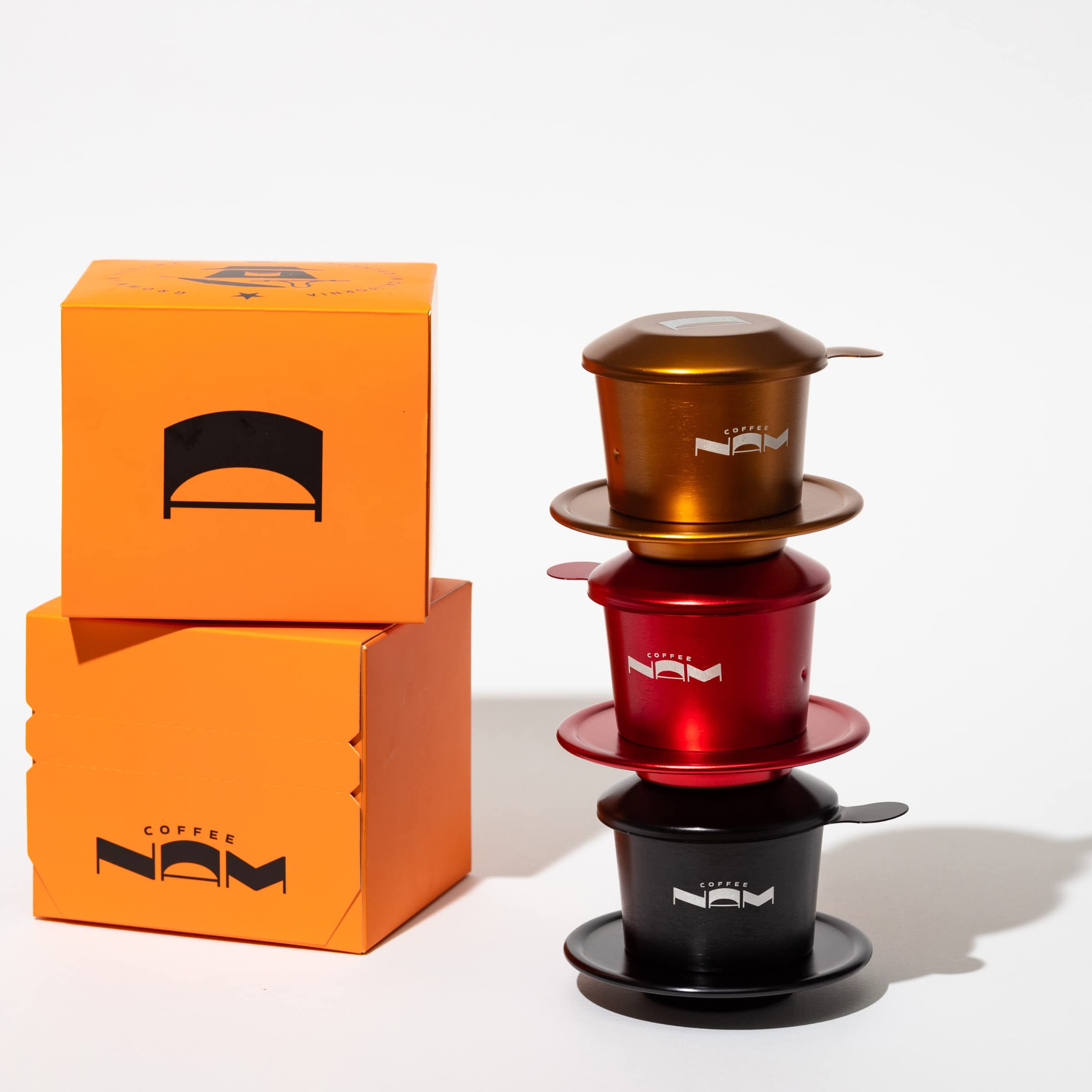
Designed to stand out both visually and in performance, the ion color-coated aluminum phin is considered the most advanced option currently on the market. It is manufactured using an aluminum anodizing process, which hardens the surface and makes it significantly more resistant to denting and warping compared to standard phins.
The ion coating also dramatically reduces scratching, surface corrosion, and yellowing. This is why this type consistently receives top ratings among coffee professionals and enthusiasts alike. If you are setting up a café and want a phin that makes a strong visual impression on guests, this option is worth serious consideration.
Read more: What Grind Size is Best for Vietnamese Phin Coffee?
How to care for your phin filter
Maintenance tips:
- Rinse your phin filter immediately after each use and store it in a cool, dry place to prevent bacteria from building up.
- Always rinse the phin and all brewing components with hot water before use.
How much does a Vietnamese phin filter cost?
Prices vary by material. Generally speaking, a Vietnamese phin filter falls in the range of around $1.50 to $7.00 USD, making it one of the most accessible specialty coffee brewing tools in the world. Higher-end models such as ceramic or anodized aluminum versions may cost more.
Which phin filter should you choose?
Think about how you plan to use it. If you want a reliable daily brewer with good heat retention, the aluminum or anodized aluminum phin is hard to beat. If durability and control are your priority, go for stainless steel. If aesthetics matter as much as function, ceramic makes a beautiful addition to any coffee setup.
Your choice of phin filter will have a real impact on the flavour, aroma, and quality of your Vietnamese drip coffee, so it is worth taking the time to choose well.
We hope this guide helps you feel confident in picking the right phin for your Vietnamese coffee journey.
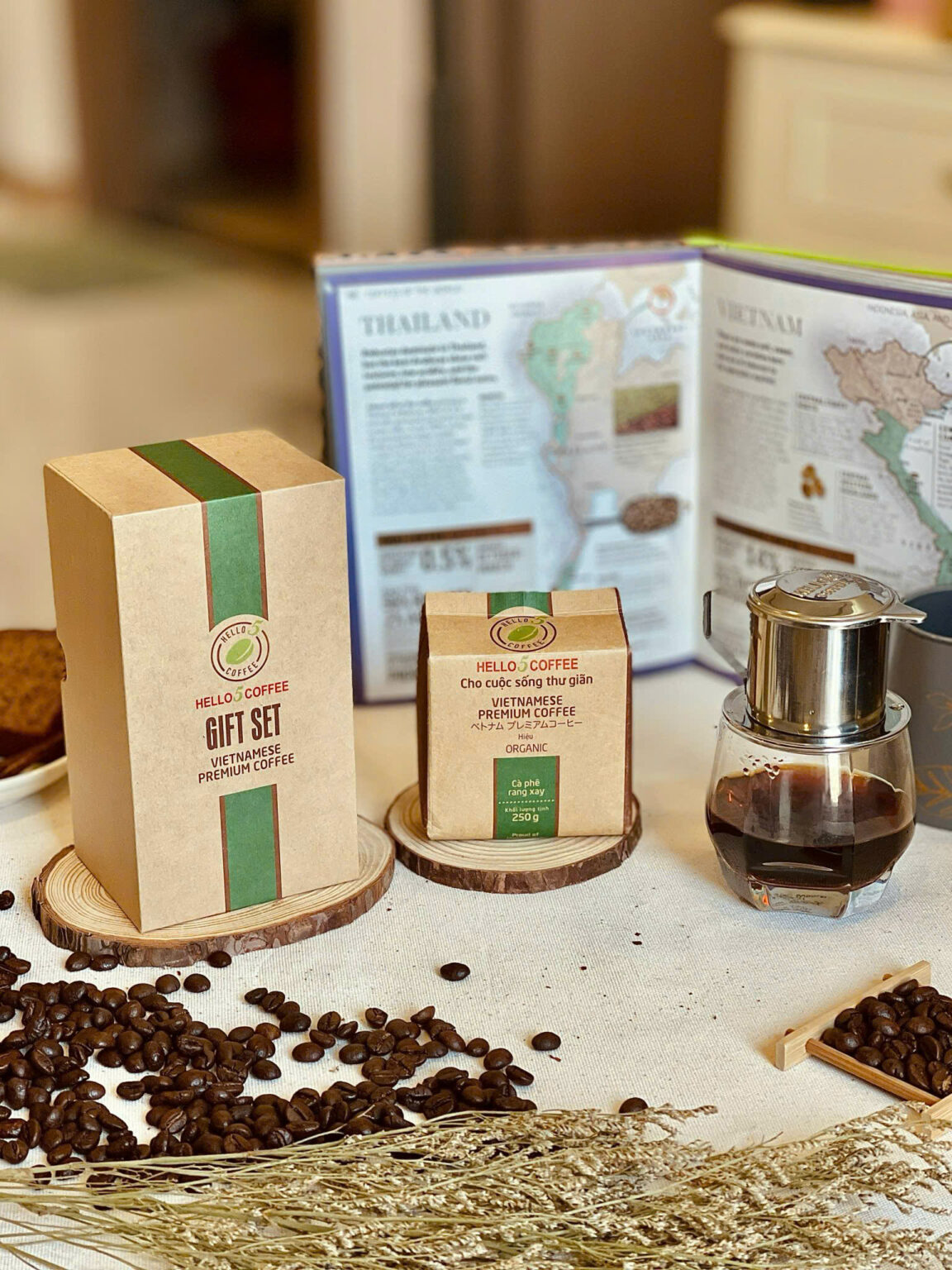
If you are looking for a trusted source of authentic Vietnamese coffee to brew with your new phin, look no further than Hello 5 Coffee. We specialise in pure roasted and ground coffee, green (unroasted) beans, and natural (unwashed) coffee. Hello 5 Coffee is proud to be a reliable wholesale Vietnamese coffee supplier, and we will not let you down.
Choosing Hello 5 Coffee means saving time, reducing costs, and protecting your health from unlabelled, low-quality products flooding the market today. With years of experience in the Vietnamese coffee industry, our team is here to support you every step of the way, whether you are a home brewer or running a business.
Leave your information to schedule a roasting appointment, or reach out to us now for a consultation.
Contact Hello 5 Coffee
Browse and order our roasted and ground Vietnamese coffee here:
- Website: https://hello5coffee.com
- Hotline: (+84) 81 535 5505
- Email: info@hello5coffee.com
- Address: V5A, House Number 08, Van Phu Urban Area, Ha Dong, Hanoi, Vietnam.
