
Most people smell their coffee once, decide the scent is good, and drink it.
That’s a missed opportunity. The aroma, fragrance, and full flavor profile of a coffee carry more information than anything your tongue can detect on its own. Learning to read those signals will permanently change how you buy, brew, and experience coffee.
This guide covers the science behind coffee’s complex smell, what specific notes actually tell you about a bean, and how to use your nose as a practical diagnostic tool.
Fragrance, aroma, and bouquet: They’re not the same thing
Most people use these words interchangeably. In professional coffee tasting, they refer to three distinct things.
- Fragrance is the smell of dry, ground coffee before any water is added. It’s lighter and more volatile, which is exactly why you can catch delicate floral or fruit notes at this stage that disappear the moment brewing begins.
- Aroma is the smell of coffee after hot water makes contact with the grounds. This is the rich, intense wave of scent you experience during brewing.
- Bouquet, sometimes called the “nose,” refers to the overall smell profile of the brewed cup in front of you, the combined impression of everything rising from the liquid.

Understanding this distinction matters because each stage reveals different characteristics. The dry fragrance of a Vietnamese natural-processed Robusta, for example, might suggest dried cherry and dark chocolate. The wet aroma from the same brew often shifts toward something earthier and more intense. Then the nose of the finished cup settles into something rounder and more complex.
If you’re only smelling your coffee once, you’re reading one page of a three-page story.
Where coffee’s smell actually comes from
Raw green beans have almost no aroma worth noting. The entire fragrance and flavor profile of a roasted coffee is built during one process: roasting.
Two chemical reactions drive this.
- The Maillard reaction occurs when amino acids and sugars combine under heat. It creates hundreds of volatile aromatic compounds responsible for roasted, nutty, caramel, and chocolatey notes. This is the same reaction that gives bread its crust smell, steak its seared scent, and Vietnamese cà phê đen its characteristic dark fragrance.
- Caramelization happens when sugars break down at higher temperatures, generating sweet, toffee, and fruity aromatic compounds.
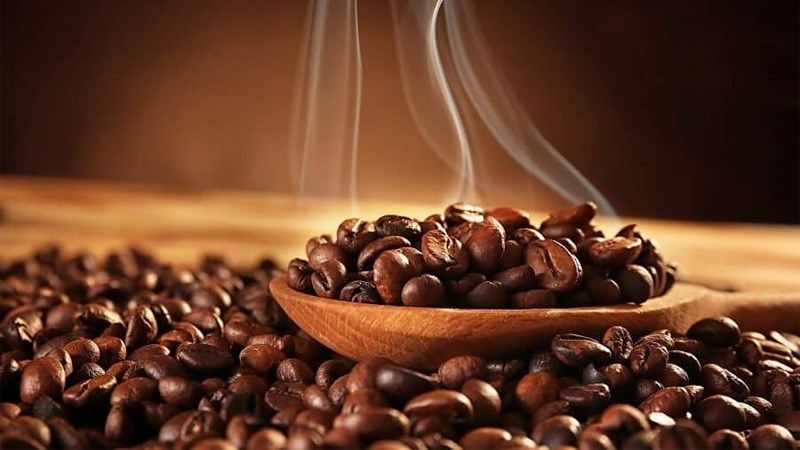
Both happen simultaneously. The roaster controls temperature, airflow, and timing to determine how far each reaction develops. Stop early and you preserve lighter, more aromatic fruit and floral compounds. Push further and those give way to the heavier, roasted scents of a darker profile.
The same Vietnamese Robusta bean, roasted two different ways, will produce an entirely different fragrance. This is why roast level is one of the first things to look at when evaluating any coffee’s aroma.
What your nose is actually detecting: Over 1,000 compounds
Wine contains roughly 200 to 300 identified aromatic compounds. Beer has around 600. Coffee contains over 1,000, making it one of the most chemically complex sources of scent that humans regularly consume.
These compounds are volatile, meaning they evaporate from the coffee and reach your olfactory receptors. Up to 80% of what you experience as “flavor” comes from this smell pathway, not from your taste buds. This is the technical reason why coffee tastes almost like nothing when your nose is blocked.
The SCA (Specialty Coffee Association) developed the Coffee Taster’s Flavor Wheel to organize these aromas into a working vocabulary. It groups the thousands of compounds into nine broad families: fruity, floral, sweet, nutty and cocoa, spicy, roasted, green and vegetal, sour and fermented, and earthy.
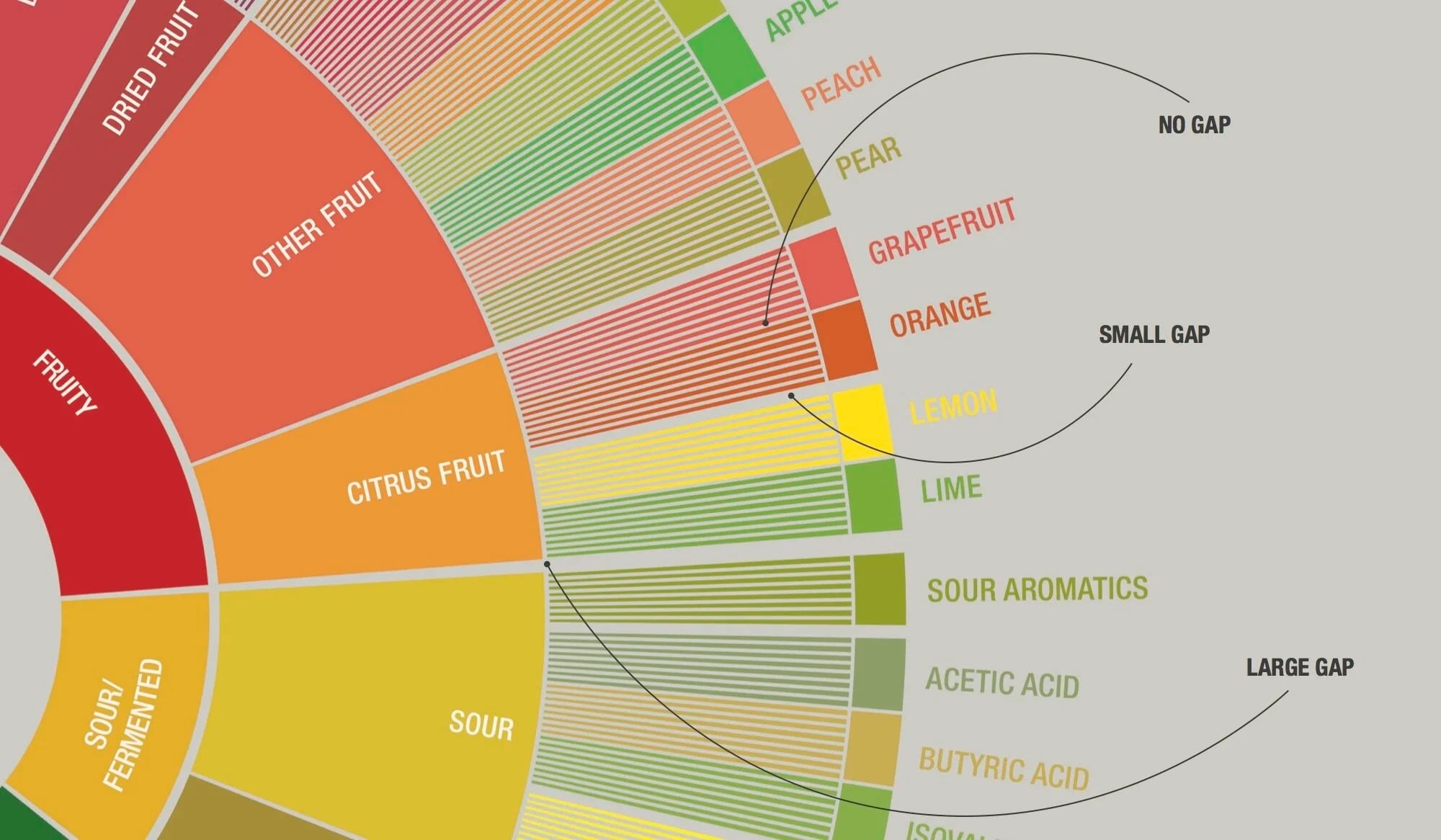
Each family points to something real in the bean’s origin, processing method, or roast level. This turns the flavor wheel from a decoration into an actual diagnostic tool.
What each scent tells you about a coffee
This is where aroma becomes genuinely useful.
- Floral scent (jasmine, rose, lavender) signals light roast, high altitude origin, and typically washed processing. If you smell florals in a Vietnamese Arabica from Lam Dong, that’s the high-elevation terroir expressing itself. Preserve it with low brew temperatures and a light roast.
- Fruity fragrance (berry, citrus, stone fruit, dried cherry) comes from natural sugars and organic acids surviving into the cup. These notes thrive in light roasts and natural processing. A Vietnamese natural-processed Robusta with strong berry notes in the dry fragrance is showing you quality at the processing level.
- Caramel and honey scent indicates balanced roast development. Sugars developed without burning. It’s a reliable sign of careful roasting, especially visible in the wet aroma stage.
- Chocolate and nutty notes (cocoa, hazelnut, dark chocolate, almond) are the signature flavor profile of medium-to-dark-roasted Vietnamese Robusta. These are the tasting notes most international buyers associate with Vietnamese coffee, and for good reason. They come from the Maillard reaction interacting with Robusta’s naturally high chlorogenic acid content.
- Earthy scent (forest floor, soil, leather, mushroom) is characteristic of Robusta at origin. In controlled amounts it adds depth and body. In excess it signals lower-grade beans or poor storage. There’s a significant difference between the rich, dark earthiness of well-grown Central Highlands Robusta and the flat, musty smell of commodity beans. If you’re evaluating a Vietnamese coffee sample and the earthy note smells clean and grounding rather than stale or mouldy, that’s a positive indicator.
- Smoky or ashy smell comes from dark roasting. Sometimes intentional for espresso blends. When it appears in medium-roast samples, it points to defects or uneven roasting.
- Sour or fermented fragrance (vinegar, overripe fruit, alcoholic sharpness) is almost always a defect at the processing stage, typically over-fermentation during the washing or natural drying process. One sniff during cupping is enough to identify it.
- Green or vegetal smell (fresh cut grass, raw bean, hay) indicates under-development during roasting. The beans didn’t reach full transformation. This is a roasting error, not an origin characteristic.

The distinctive scent of Vietnamese coffee
Vietnamese coffee has a globally recognizable smell profile, but most people encounter it only in the commodity form: dark-roasted, earthy, and heavy, with strong chocolate and bitter notes from the phin-filtered brew.
That profile is real, but it’s one expression of a much broader range.
- Vietnamese Robusta from the Central Highlands (Dak Lak, Gia Lai, Lam Dong) grown at 600 to 900 meters has a naturally full-bodied fragrance with dark chocolate, dried fruit, and an earthy sweetness when processed well. The high chlorogenic acid content gives the aroma a distinctive boldness absent from most Arabica. When roasted medium rather than dark, the roasted coffee scent is rich without becoming flat.
- Naturally processed Vietnamese Robusta is where the scent profile gets more complex. Drying the whole fruit allows sugars and pulp compounds to absorb into the bean over several weeks. The resulting fragrance shifts toward dried cherry, dark berry, wine-like depth, and sometimes cocoa-forward sweetness. It’s still unmistakably Robusta in body and intensity, but the tasting notes are far removed from commodity-grade expectations.
- Anaerobic natural processing, where beans ferment in sealed oxygen-free containers before drying, pushes this further. The controlled fermentation produces unique aromatic compounds not found in conventional processing. Vietnamese specialty producers experimenting with this method are achieving flavor profiles with whisky-like depth, tropical fruit, and a complex nose that scores well in international cupping competitions.
- Vietnamese Arabica from Lam Dong at 1,200 to 1,600 meters has a gentler fragrance: stone fruit, light florals, and mild citrus acidity. Less intense than the Robusta, but more layered and aromatic in the traditional specialty sense.
Read more: The flavor profile of Vietnamese specialty coffee explained
How storage destroys coffee’s fragrance
Aroma compounds are volatile by nature. They degrade and evaporate with exposure to oxygen, heat, light, and moisture. Once lost, they cannot be recovered.
After roasting, coffee releases carbon dioxide for several days. During this off-gassing period, the same CO₂ that blooms in your pour-over actually competes with aromatic compounds reaching your nose. Most specialty roasters recommend a rest of 7 to 14 days post-roast before the full bouquet opens up.
After that window, degradation begins. A Vietnamese natural-processed coffee that smells like dried cherry and dark chocolate at two weeks will have a noticeably thinner, papery scent by week six without proper storage.
Practical rules that actually matter:
- Store whole beans in an airtight container away from heat and light. A sealed bag with a one-way valve works well. An opaque container in a cupboard is sufficient.
- Buy in quantities you’ll finish within three to four weeks of opening. Once the bag is open, oxygen exposure begins.
- Grind immediately before brewing. Whole beans preserve their fragrance far longer than pre-ground coffee. Ground coffee loses a significant portion of its volatile aromatic compounds within 30 minutes of grinding.
- For long-term storage: the freezer works if the container is genuinely airtight and stays frozen until you’re ready to use the entire portion. Partial thawing and refreezing cycles damage both scent and flavor.
A simple three-day nose training exercise
You don’t need any special equipment.
- Day 1: Grind your current coffee and smell the dry fragrance carefully for 30 seconds before brewing. Write down three words, anything that comes to mind.
- Day 2: Repeat, but this time focus on the wet aroma the moment hot water hits the grounds. Compare what you smell now to your Day 1 notes. What’s different?
- Day 3: Drink slowly and pay attention to the retronasal finish as you swallow. What lingers? Does it match the initial fragrance?

By day three, most people notice they’ve started smelling coffee rather than just confirming it smells like coffee. That gap is where the training starts.
The next step is comparison. Brew a washed-process and a natural-process coffee side by side. The contrast in fragrance, aroma, and overall bouquet will sharpen your perception faster than any single-origin tasting can.
Using aroma as a quality signal before you buy
For buyers sourcing Vietnamese coffee, whether for a café, a roastery, or wholesale, sample evaluation should always start with smell.
A coffee with a complex, clean, and evolving fragrance almost always points to quality at the origin and processing levels. Flat, thin, or one-note scent profiles point to problems that no brewing skill can compensate for.
The earthy depth of a well-grown Central Highlands Robusta should smell rich and full, not musty or medicinal. The fruity fragrance of a natural-processed lot should smell like clean dried fruit, not fermented or sour. The chocolatey nose of a properly roasted Vietnamese espresso blend should be round and sweet, not burnt or acrid.
Coffee’s scent is the honest part. It’s harder to disguise than body or color. If the bouquet is right, everything downstream has a chance to be good. If it isn’t, no amount of careful brewing will fix it.
Hello 5 Coffee sources and exports specialty-grade Vietnamese Robusta and Arabica, including naturally processed and anaerobic lots, to wholesale buyers globally. For export inquiries and sample requests, visit hello5coffee.com.
