
Coffee is one of the crops with high economic value in Vietnam. To achieve the best yield and quality, choosing the right coffee soil plays an important role. Coffee soil not only affects the growth of the plant but also determines the characteristic flavor of coffee beans. Let’s explore the characteristics of coffee soil types with Hello 5 Coffee in this article.
Some common coffee soil types today
In the world, there are many different types of soil used for growing coffee. Each type of soil has its own distinct characteristics, affecting the development and quality of coffee. Below are some common coffee soil types today:
Nitisol soil (Nitosols)
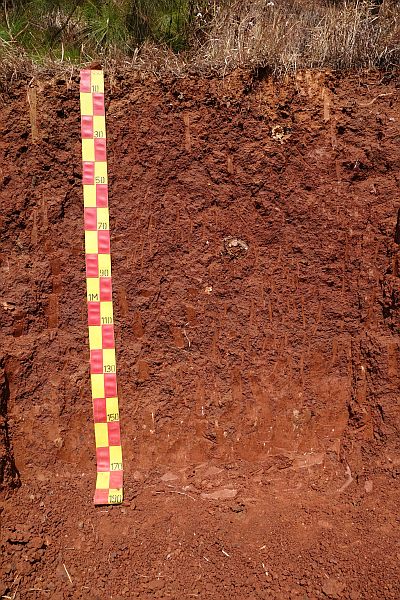
Nitisol soil, also known as Nitosols, is one of the popular coffee soil types. They account for 1.6% of the land area on the globe. This type of soil usually has good depth and structure, helping coffee plant roots develop strongly. The outstanding feature of Nitisol soil is its good water retention ability, while providing sufficient nutrients for plants. In Vietnam, Nitisol soil is usually distributed in midland and mountainous areas.
Ferralsols soil (Basalt red soil)
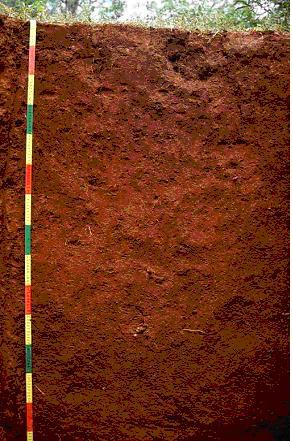
Ferralsols soil, also known as basalt red soil, is considered the essence of the earth when it appeared from volcanic eruptions over tens of millions of years. Currently in the world there are 730 million hectares, of which Vietnam accounts for 3 million hectares (accounting for 10% of Vietnam’s area).
There is an interesting point that according to research from the Journal of Science and Development 2013, volume 11, number 5. Our country’s coffee is all grown on basalt red soil, accounting for 97.5% of the area and other soils only account for 2.5% of the area. In particular, the Central Highlands region of Vietnam is extremely famous for its basalt red soil, as this is where the most flavorful coffee beans are produced. This type of soil has a loose, airy texture and is rich in organic matter, helping coffee plants develop strongly. The drainage capacity of Ferralsols soil also helps plants avoid waterlogging.
Andosol soil (Volcanic soil)

Andosol soil, also known as volcanic soil, is a rare type of soil in Vietnam but is present in many famous coffee growing regions in the world. Andosol soil has high fertility and is rich in organic matter, helping coffee plants grow well. However, this type of soil requires special cultivation techniques to maintain soil quality.
Requirements for quality and structure of coffee soil
For coffee plants to develop strongly, besides choosing the right type of soil, farmers need to pay attention to the requirements for quality and structure of coffee soil. Some important factors include pH level, drainage capacity and nutrient levels in the soil.
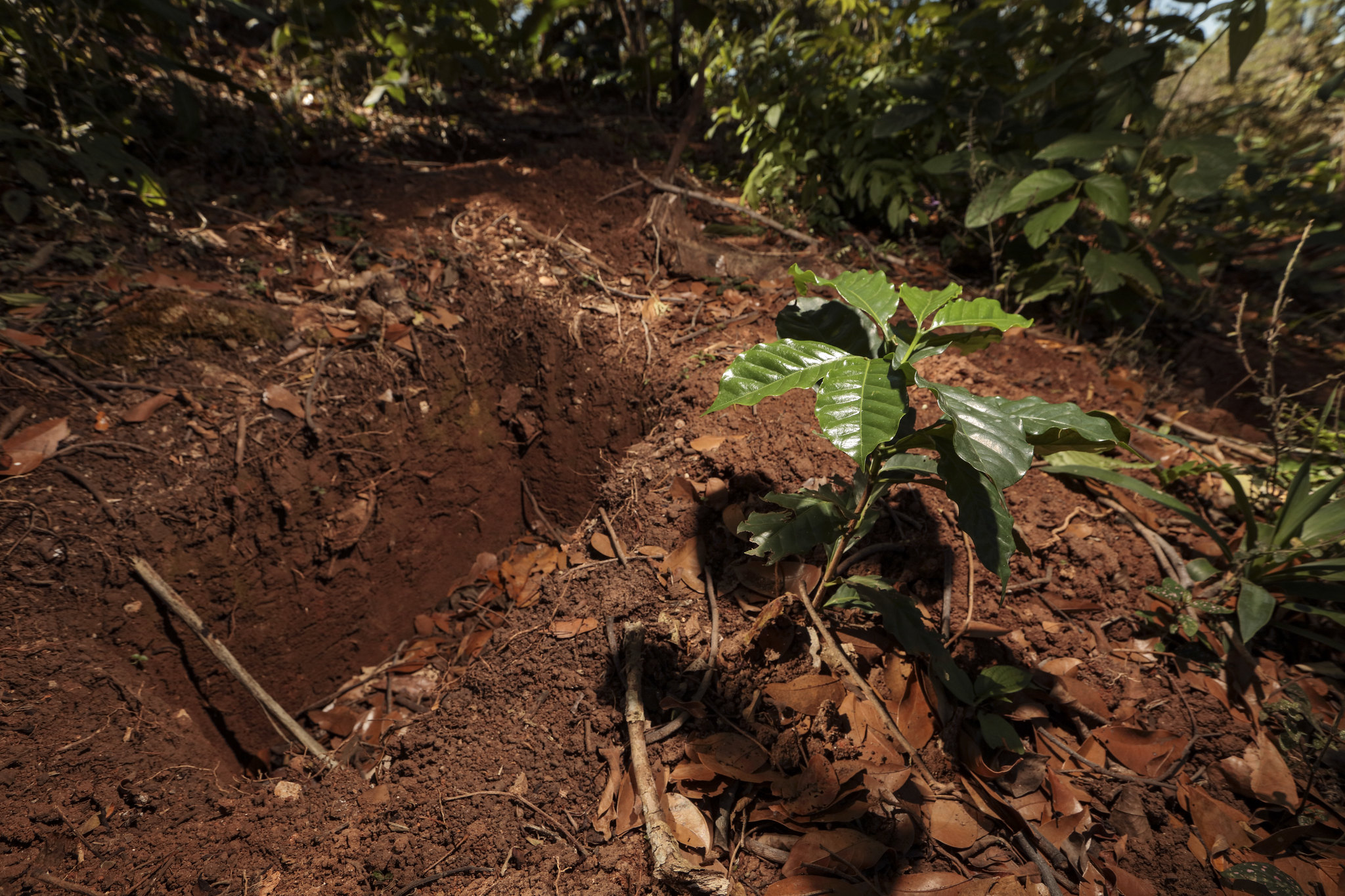
Quality requirements for coffee soil
Many current studies suggest that coffee will grow best if planted in soil with a pH from acidic (pH below 4.0) to slightly alkaline (pH up to 8.0). However, there are still some studies that support the use of slightly acidic soil. Regarding the content in the soil, the soil must achieve an organic content of over 3%. In the case of organic content in the soil being too low, before planting coffee, farmers need to have soil improvement measures using legumes or green manure, etc. Sometimes they even have to invest in manure to ensure the plant grows well throughout the development period.
Soil structure requirements (physical properties)
Soil structure greatly affects the development ability of the coffee plant’s root system. The soil needs to be loose, have good aeration and drainage, avoiding waterlogging that harms the plant. The soil should also not be too hard or too soft, this will affect the ability of the coffee plant to absorb water and nutrients.
Chemical property requirements
Besides structure, the chemical properties of soil also play an important role. Coffee soil should have high mineral content, especially trace elements such as iron, calcium and potassium. These elements help coffee plants develop strongly, while improving the quality of coffee beans after harvest.
Biological requirements in soil
The presence of microorganisms in the soil is beneficial for the decomposition process of organic matter, helping coffee plants absorb nutrients more easily. Coffee soil should have a rich microbial system, ensuring the sustainable development of plants throughout the cultivation process.
So which soil is most suitable for growing coffee in Vietnam?
In Vietnam, the Central Highlands is a famous coffee growing region in Vietnam, as this is the largest coffee production area in the country, and Ferralsols soil (basalt red soil) is considered the most suitable type of soil for growing coffee. This is a type of soil with high fertility, good drainage and rich in nutrients. With these soil characteristics, coffee plants grown in the Central Highlands produce coffee beans with rich flavor, suitable for export coffee standards.

Choosing suitable coffee soil is a key factor to ensure plants grow well and produce quality coffee beans. Soil types such as Ferralsols, Nitisol and Andosol all have their own advantages. But the most important thing is still the continuous care and improvement of soil by farmers.
When mastering the requirements for quality and structure of coffee soil, growers can optimize the cultivation process, thereby achieving high yields and bringing sustainable income. Good soil quality not only helps plants develop but also contributes to creating the Vietnamese coffee brand on the world map.
We hope the above sharing from Hello 5 Coffee has helped you understand more about coffee soil types. From there, provide appropriate care methods to improve productivity and income!
