
Behind thriving green coffee plantations lurks the danger of diseases silently attacking, threatening productivity and quality. To salvage the harvest before it’s too late, you need to understand common diseases on coffee plants and know how to deal with them effectively. Don’t miss these important insights in this article from Hello 5 Coffee!
1. Pink Disease on Coffee Plants (Corticicum salmonicolor)
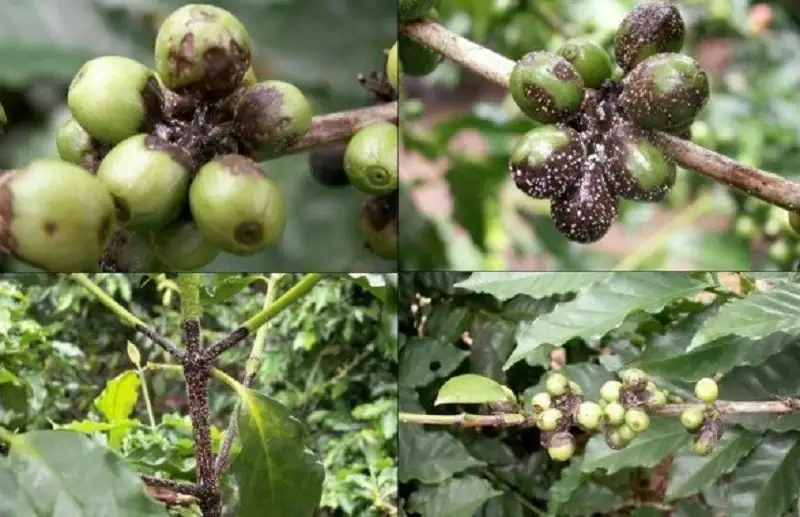
Pink disease is caused by the fungal agent Corticicum salmonicolor. Pink disease on coffee plants can be identified through several characteristic manifestations, typically appearing on the stem and branches of the plant.
- Early stage: Disease spots appear as small pink spots on the stem or branches. These spots then develop into larger diseased areas, turning pale yellow and eventually grayish-white.
- Severe disease development: If the disease progresses, the fungus can create a thin web covering the infected parts, mainly the stem and branches. This fungal layer can spread widely and surround the entire stem, causing serious damage to the coffee plant.
- Impact on Leaves: Leaves near the fungus-infected area often turn yellow, wilt and fall prematurely. This reduces the plant’s photosynthetic capacity, directly affecting coffee productivity.
2. Root Rot Disease on Coffee Plants
Root rot disease is mainly caused by soil fungi such as Fusarium spp., Rhizoctonia solani, and Pythium spp. Coffee plants with root rot disease typically show external and internal signs that are easy to identify:
- Leaves: Leaves begin to turn yellow, from old leaves to young leaves, and fall easily. Wilting appears when the disease is severe.
- Stem: The stem develops poorly, branches become dry, stiff and break easily. The plant often shows signs of stunting, not developing vigorously as normal.
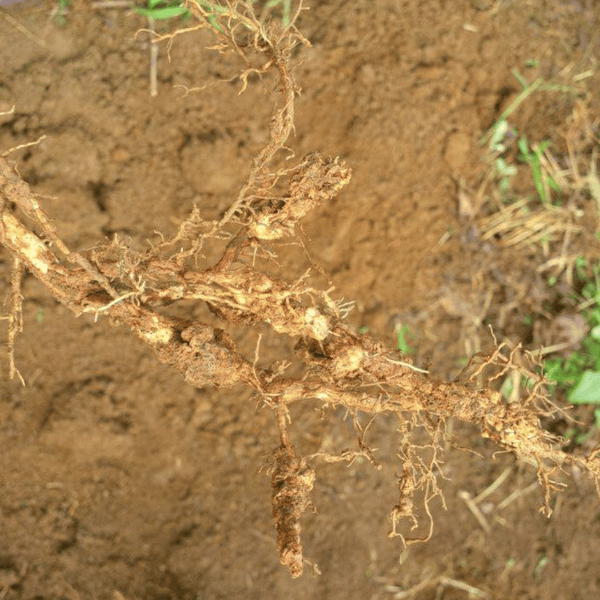
- Roots: This is the most important sign. When digging up roots, the roots turn dark brown, soft and mushy, and rotted and decomposed fine roots can be clearly seen. Roots lose their ability to absorb nutrients, causing the plant to gradually weaken.
3. Yellow Leaf Root Rot Disease on Coffee Plants
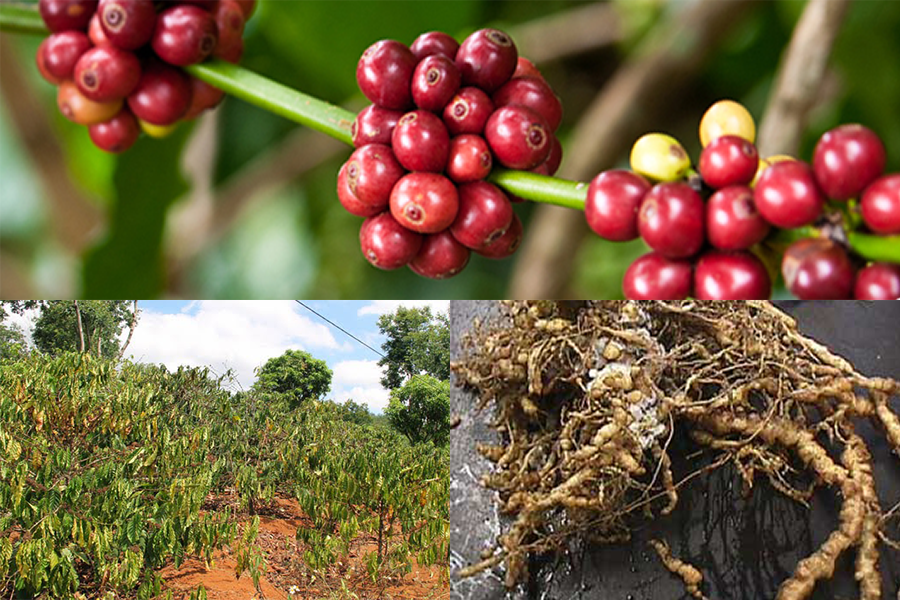
Yellow leaf root rot disease on coffee plants usually originates from mechanical wounds caused by nematodes Pratylenchus coffeae and Meloidogyne sp, combined with fungi Fusarium solani and Rhizoctonia solani. Signs of yellow leaf root rot can be easily observed on coffee plants through the plant’s developmental stages. Recognition signs include:
- Leaves turn pale yellow: Old leaves are usually the first to be affected. Leaves begin to turn yellow from the leaf veins outward, most evident during the rainy season, when high humidity creates favorable conditions for fungal growth.
- Root rot, blackened roots: Plant roots will rot, turn black and have an unpleasant odor. The plant loses its ability to absorb water and nutrients, causing the plant to grow slowly or die standing.
4. Coffee Rust Disease on Coffee Plants
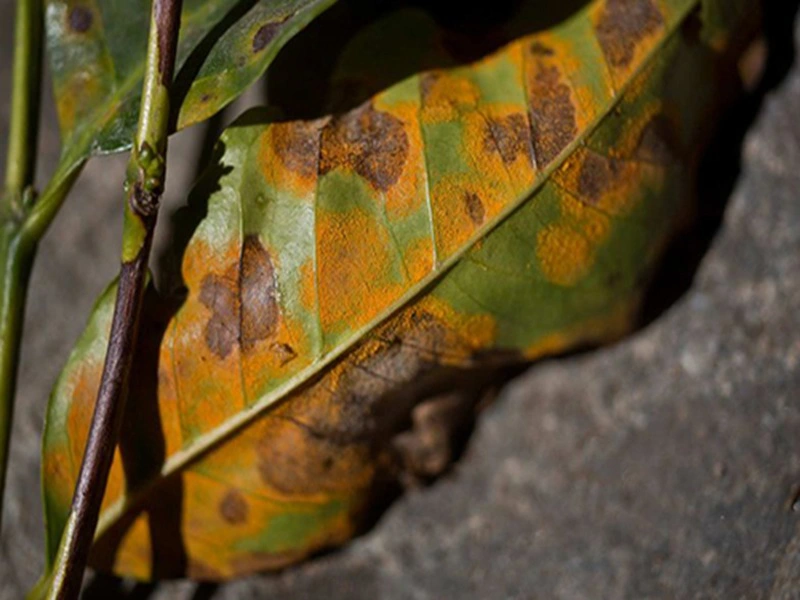
The cause of coffee rust disease on coffee plants is the fungus Hemileia vastatrix strain B and fungus Hemileia vastatrix strain Br, commonly appearing on coffee plant leaves, especially old leaves near the base. Recognition signs:
- Yellow spots: Small yellow spots begin to appear on the underside of coffee leaves.
- Transform to orange and rust color: After a short time, these spots turn orange, creating fungal spores. From a distance, the plant looks rusty, which is why the disease got its name.
- Premature leaf drop: If not treated promptly, leaves will fall prematurely, causing the plant to lose its photosynthetic capacity, seriously reducing coffee productivity.
5. Branch Dieback and Fruit Dieback Disease on Coffee Plants
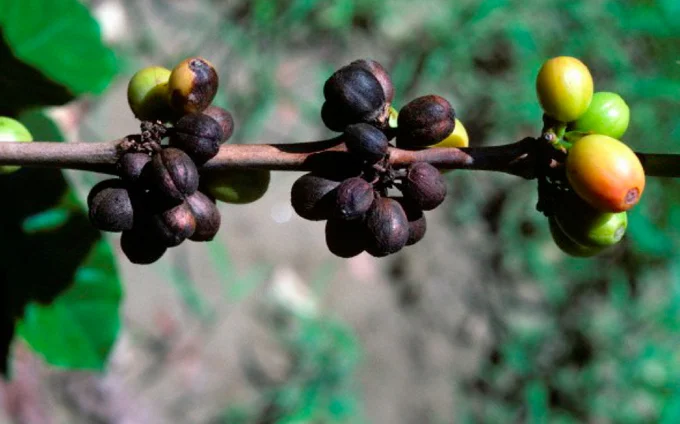
Colletotrichum fungus is the main cause of branch dieback and fruit dieback disease. Signs for farmers to recognize the disease attacking coffee plants:
- Dried withered branches: Branches begin to wither from the top down, leaves turn yellow and gradually fall. Branches lose their ability to nourish fruit and leaves.
- Dried blackened fruit: Coffee cherries dry prematurely before ripening, the fruit skin becomes hard and turns black.
- Plant doesn’t develop: Diseased branches and fruit will not continue to develop, leading to serious productivity decline.
6. Root Collar Rot Disease on Coffee Plants (Rhizoctonia solani)
Root collar rot disease is caused by fungi Rhizoctonia solani and Fusarium spp. The disease typically has the following manifestations:
- Rot spots at root collar: Initially, disease spots appear in the root collar area with a dark brown color, causing root rot.
- Root collar shrinks: The root area below the ground surface shrinks, the plant loses its ability to absorb nutrients.
- Yellow and wilted falling leaves: Due to damaged root system, plant leaves become yellow, wilt and gradually fall.
The above article has provided complete information about 6 common diseases on coffee plants. Always monitor and carefully care for your coffee plantation to prevent and promptly treat threats from these diseases, ensuring a bountiful harvest.
