
Fertilizing coffee plants — particularly with a balanced NPK fertilizer program — is one of the most critical factors determining the growth, yield, and ultimate cup quality of the beans your customers receive.
During the establishment phase, coffee plants require nutrients primarily to drive vegetative growth. During the production phase, however, the nutritional demand expands significantly: the plant must sustain vigorous growth and replace the nutrients removed through harvested cherries, pruned branches, and naturally shed foliage. Analyzing nutrient content in soil, leaves, and other plant tissues provides the scientific foundation for accurately identifying the nutritional needs of coffee plants at each stage — enabling timely, targeted supplementation that directly supports fruit development and increases harvestable yield.
1. NPK Macronutrient Nutrition for Coffee Plants
Like all crops, NPK macronutrients are the cornerstone of coffee plant nutrition. Extensive research confirms that nitrogen and potassium are the two elements consumed in the greatest quantities by coffee plants. Nitrogen directly influences shoot and leaf development and the number of productive branches; Phosphorus plays a key role in root formation, flower bud differentiation, and the development of internodes along the branch; Potassium is essential for fruit fill and the overall quality of the coffee cherry. A deficiency of any one of these elements — depending on severity — will negatively affect plant growth, yield potential, and harvest quality.
1.1 Nitrogen (N)
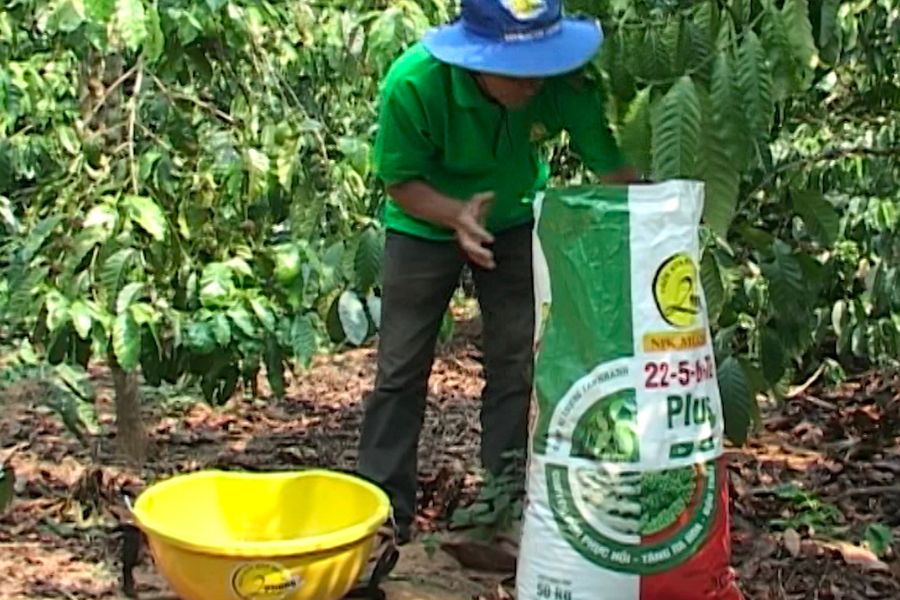
The growth, development, and yield of coffee plants are consistently and strongly correlated with nitrogen supply. During the establishment phase, young plants require abundant nitrogen to drive the rapid development of stems, branches, and leaves. For mature, producing plants, nitrogen demand peaks during the rainy season, when the plant is simultaneously swelling fruit and building the new branch framework that will carry next season’s crop.
Nitrogen deficiency causes slow, stunted growth. Internodes develop poorly, older leaves turn yellow, and early leaf drop becomes evident. Meeting the crop’s full nitrogen requirements is therefore fundamental — both for sustaining healthy plant architecture and for achieving consistently high yields.
1.2 Phosphorus (P)
Coffee plants respond strongly to phosphorus during the nursery stage and immediately after field transplanting. Phosphorus deficiency severely restricts root development during these critical early periods and compromises the plant’s performance for years afterward.
Research consistently shows that while basalt-derived soils — the dominant soil type in Vietnam’s Central Highlands — are high in total phosphorus, their available (plant-accessible) phosphorus levels are often low. Applying soluble phosphorus fertilizers directly into the active root zone therefore greatly improves phosphorus uptake efficiency.
Phosphorus deficiency symptoms typically appear first on older leaves of fruit-bearing branches. The deficiency begins as bright yellow discoloration at the leaf tip, which progressively turns pink, then deep red, before spreading across the entire leaf blade and causing premature drop.
Read more: What is the role of soil for coffee plants?
1.3 Potassium (K)
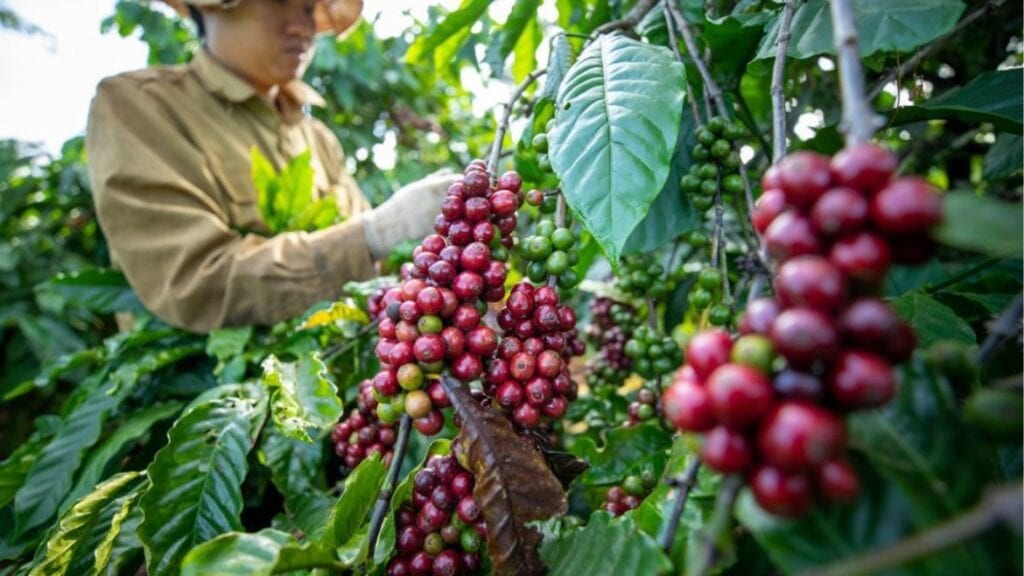
Potassium has limited impact on coffee growth during the establishment phase, but plays a decisive role during the production phase — influencing growth, development, and most critically, yield and cup quality. The plant’s potassium demand peaks during the period of rapid fruit expansion and cherry maturation. During this window, potassium concentrations in the leaf tissue can decline measurably as nutrients are redirected toward fruit fill. In practice, potassium applications are therefore typically timed to coincide with the onset of the rainy season. Severe potassium deficiency leads to significant fruit drop, premature branch dieback, and a marked decline in cup quality.
Read more: How Do Altitude and Temperature Affect the Coffee Growing Process?
2. Water-Soluble NPK Fertilizers for Coffee
According to research published by the Western Highlands Institute of Agricultural and Forestry Science (WASI), a coffee garden producing an average yield of approximately 4 tonnes of green beans per hectare (equivalent to roughly 18–19 tonnes of fresh cherry) requires the following in terms of pure nutrient content:
| Nutrient | Recommended Amount |
|---|---|
| Nitrogen (N) | 250–300 kg/ha |
| Phosphorus (P₂O₅) | 70–100 kg/ha |
| Potassium (K₂O) | 250–300 kg/ha |
For yields exceeding 4 tonnes/ha, growers should increase the total recommended fertilizer rate by 15% for every additional tonne of green bean yield.
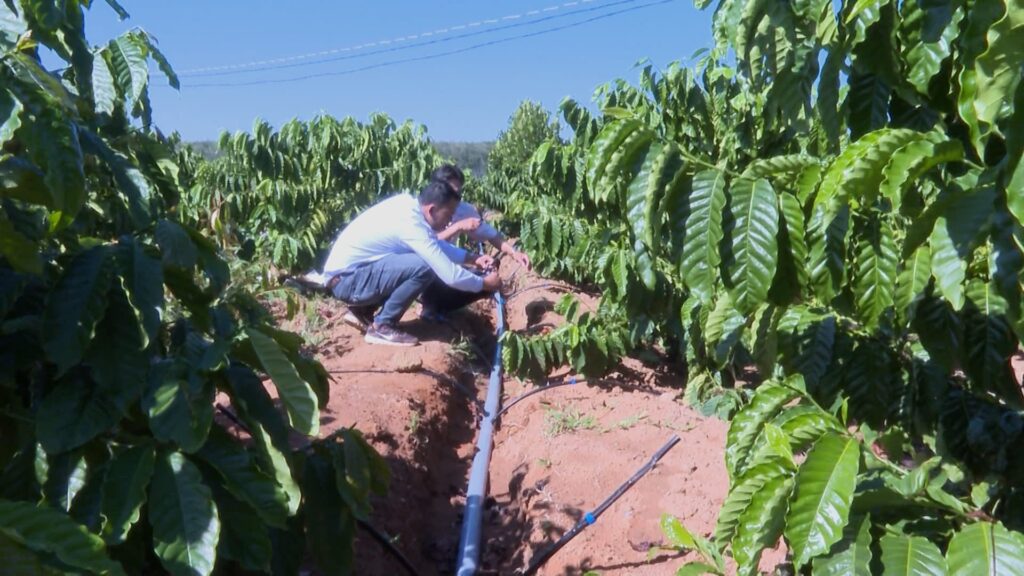
Vietnam’s Ministry of Agriculture and Rural Development (MARD) has officially recognized drip irrigation fertigation as a best practice for coffee production in the Central Highlands — a region increasingly affected by the variability of Vietnam’s shifting climate. Under this approved technical standard, growers are encouraged to use either individual mineral fertilizers such as Urea, MAP, MKP, KCl, K₂SO₄, and KNO₃, or pre-blended water-soluble NPK compounds that dissolve completely in water — applied on a regular schedule of once per month through the drip system.
Read more: What makes Vietnamese coffee so special that the world falls in love?
3. NovAcid Water-Soluble Fertilizers for Coffee
When blending individual soluble mineral fertilizers, it is essential to follow correct mixing protocols to prevent precipitation and avoid clogging irrigation lines and drip emitters. Growers may work with various fertilizer formulations, provided the final nutrient ratios reflect the pure nutrient targets outlined above.
NovAcid, imported from Israel, is a premium 100% water-soluble NPK fertilizer range engineered for drip fertigation. NovAcid supplies a complete nutritional profile — including macronutrients, secondary nutrients, and trace elements — across four specialized formulations, each matched to a specific growth stage of the coffee plant:
| Formulation | Nutrient Profile | Key Function |
|---|---|---|
| NovAcid 13-40-13+TE | High phosphorus | Promotes root development and efficient flower bud differentiation |
| NovAcid 22-11-11+TE | High nitrogen + Magnesium | Drives vigorous shoot and canopy development; Magnesium supports dense, dark foliage and strong photosynthesis |
| NovAcid 19-19-19+3CaO+TE | Balanced NPK + Calcium | Balanced nutrition during fruit set and early fruit development |
| NovAcid 12-4-36+3CaO+TE | High potassium + Calcium | Supports late-stage fruit fill, cherry maturation, and improved cup quality |
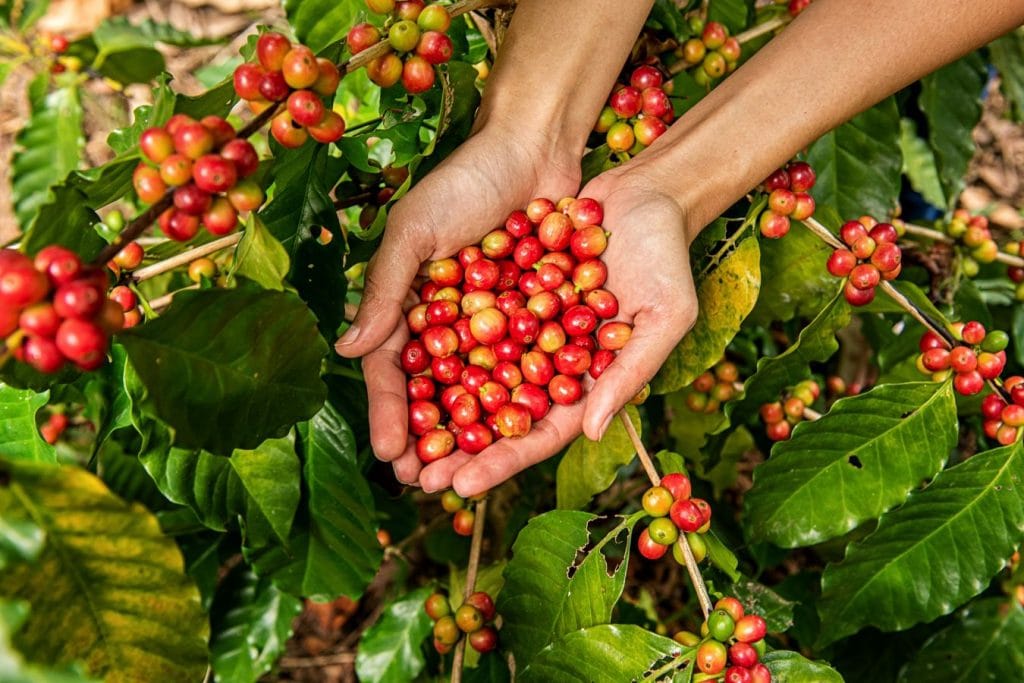
At Hello5Coffee, we work directly with growers in Vietnam’s premier coffee-producing regions who follow these science-based nutrition programs. The result is exceptional green coffee — consistent in quality, traceable in origin, and available in commercial volumes for international buyers.
