
In recent years, global coffee buyers have been facing a growing challenge: coffee quality is becoming increasingly inconsistent, even when sourced from well-known producing countries such as Vietnam, Brazil, Colombia, or Ethiopia.
According to the international coffee organization (ICO), climate-related disruptions have affected more than 60% of global coffee-producing areas since 2015, impacting not only yields but also consistency in cup quality. Importers and roasters are reporting higher defect rates, unstable flavor profiles, and a widening gap between pre-shipment samples and arrival performance.
This is no longer a local or seasonal issue. It is a structural shift in the global coffee supply chain that requires buyers to reassess how they evaluate and source green coffee today.
1. Why coffee input quality is declining
Climate stress is reshaping quality at origin
Climate change has become one of the most decisive factors influencing coffee quality worldwide. Rising temperatures, irregular rainfall, and prolonged droughts are shortening harvest windows across producing countries.
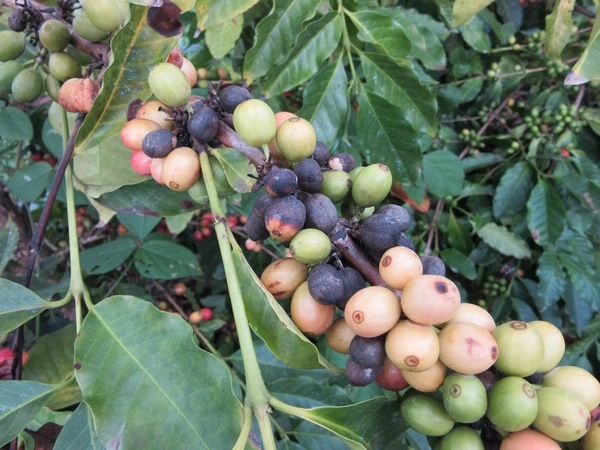
Field data referenced by the Food and Agriculture Organization (FAO) indicates that harvest periods in many regions are now 10–20% shorter than they were a decade ago. As a result, farmers are often forced to harvest cherries with mixed ripeness levels, reducing sugar development and increasing bitterness and astringency in the cup.
For buyers, this explains why coffees that meet visual grading standards can still underperform after roasting.
Yield pressure is replacing quality-driven farming
Global coffee consumption continues to grow at approximately 2% per year, while land suitable for coffee production is shrinking, particularly for arabica varieties.
To maintain income, many producers prioritize yield over long-term quality. Agronomic studies cited by the ico show that aggressive fertilization and reduced pruning cycles can increase short-term yield by 10–15%, but often result in lower bean density and weaker internal structure.
These changes translate into uneven roasting behavior, narrower development windows, and reduced extraction efficiency for roasters—hidden costs that are rarely reflected in green coffee pricing.
Post-harvest shortcuts are becoming more common
Rising labor, energy, and infrastructure costs are pushing producers toward faster and less controlled post-harvest processes.
Across Latin America, Africa, and Southeast Asia, exporters report increased use of shortened fermentation times, high-temperature mechanical drying, and reduced resting periods before hulling.
While these coffees often pass basic export specifications, industry cupping data shows that rushed drying can reduce perceived sweetness and aromatic complexity by up to 30% within 3–6 months of storage. This is one of the main reasons buyers experience acceptable pre-shipment samples but disappointing arrival results.
Fragmented supply chains increase variability
In most producing countries, coffee production is dominated by smallholder farms. Coffee is typically aggregated before it is standardized, leading to significant internal variability within the same grade or lot.
Large commercial roasters report that internal lot variability has increased by 15–25% over the past decade, even when sourcing from the same origins. As a result, origin reputation alone is no longer a reliable indicator of quality consistency.
2. How to identify and evaluate quality coffee properly
Evaluating coffee quality today requires more than checking origin and grade.
Moisture content alone is no longer sufficient. Coffee with 11–12% moisture can still be unstable if drying was rushed. Professional buyers increasingly request details on drying methods, resting time before hulling, and water activity (aw), with values below 0.60 considered more stable for storage and transport.
Density is another critical indicator. Large beans do not automatically indicate quality. Low-density beans tend to roast unevenly, develop harsher flavors, and degrade faster over time. Screen size should always be evaluated alongside density metrics.
Crop year transparency is also essential. During supply shortages, old-crop coffee is increasingly blended into new shipments without clear disclosure. Buyers should always confirm harvest year, storage conditions, and cup coffee with aging behavior in mind.
Finally, comparing pre-shipment samples with arrival samples remains one of the most effective ways to assess supplier reliability. Many quality issues only appear after transit, particularly when moisture stability is compromised.
3. Where to source coffee to ensure quality and consistency
Vietnam’s shift toward quality-focused coffee sourcing
Vietnam is widely known as the world’s largest robusta producer, but the country’s coffee sector has been evolving rapidly in recent years.
Investments in improved post-harvest processing, farm-level quality management, and traceability systems are helping Vietnam move beyond volume-driven production. Today, the country is increasingly recognized as a reliable origin for consistent, high-performing commercial and premium coffees, especially for buyers who value scalability and stability.
Why sourcing partners matter more than origin alone
In the current market environment, quality consistency depends less on country reputation and more on who manages the supply chain.
Reliable sourcing partners offer transparent traceability, lot-level quality control, and pre-shipment testing aligned with buyer requirements. These practices significantly reduce sourcing risk and improve long-term performance.
Hello 5 coffee: A quality-driven sourcing partner from Vietnam
Hello 5 Coffee represents a new generation of vietnamese coffee exporters focused on consistency, transparency, and buyer-oriented sourcing.
By working closely with farmers and processing partners, Hello 5 Coffee emphasizes controlled post-harvest processing, moisture and density stability, and clear crop-year traceability at the lot level.
For global buyers sourcing coffee from Vietnam, Hello 5 Coffee provides a reliable supply model aligned with modern quality expectations and long-term partnership goals.
The global coffee industry is entering a phase where quality can no longer be assumed. Origin, certification, and price alone are no longer sufficient indicators.
Buyers who succeed are those who verify quality at the lot level, evaluate coffee technically, and build long-term relationships with accountable sourcing partners.
In an increasingly unstable supply environment, consistent coffee quality has become a strategic advantage rather than a given.
