
For many years, coffee leaf rust was viewed primarily as an agronomic issue, something farmers and agronomists needed to manage at origin. Today, that perspective is no longer sufficient.
Coffee leaf rust (Hemileia vastatrix) has become a systemic risk to global coffee sourcing. It affects not only yields, but also bean quality, consistency between lots, and the long-term reliability of supply chains. For buyers sourcing coffee across multiple origins, leaf rust is now a variable that directly influences quality outcomes and commercial risk.
According to the International Coffee Organization (ICO), outbreaks of coffee leaf rust have contributed to yield losses ranging from 15% to more than 40% in affected regions during severe cycles. In Central America alone, the rust crisis between 2012 and 2014 reduced regional coffee production by over 2.7 million bags, disrupting export contracts and pushing many buyers to seek alternative origins.
What is often less discussed, however, is how leaf rust reshapes coffee quality itself, even in years when export volumes appear stable.
How coffee leaf rust quietly degrades coffee quality
Coffee leaf rust attacks the leaves of the coffee tree, limiting its ability to photosynthesize. When this happens, the tree’s energy balance changes. Less energy is available for cherry development, and that shift has direct consequences for bean structure and flavor.
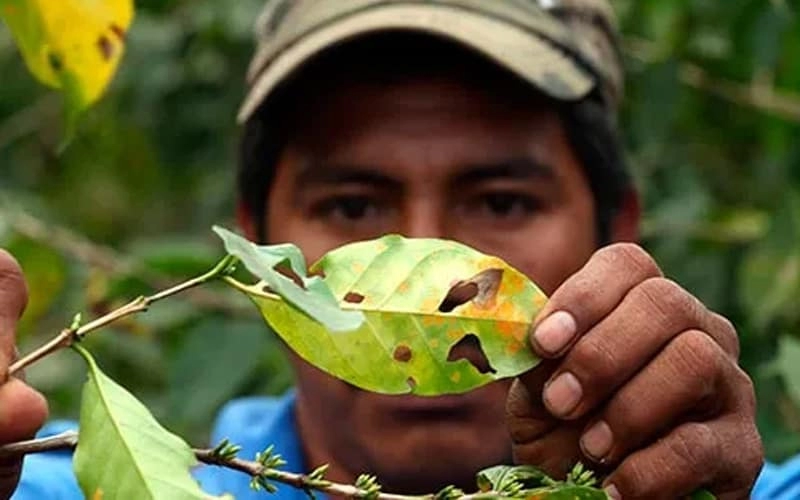
Field studies referenced by the Food and Agriculture Organization (FAO) show that rust-affected trees produce beans with lower average density and weaker internal structure. From a buyer’s perspective, this matters because density strongly correlates with roasting behavior. Lower-density beans tend to absorb heat unevenly, narrow the development window, and increase the risk of harsh or hollow flavors.
Beyond structure, leaf rust also affects flavor chemistry. When photosynthesis is compromised, sugar accumulation in the cherries declines. In cupping, this typically translates into reduced sweetness, flatter acidity, and shorter finish, even when beans visually meet grading standards. This is one of the reasons buyers increasingly encounter coffees that “look right on paper” but fail to deliver in the cup.
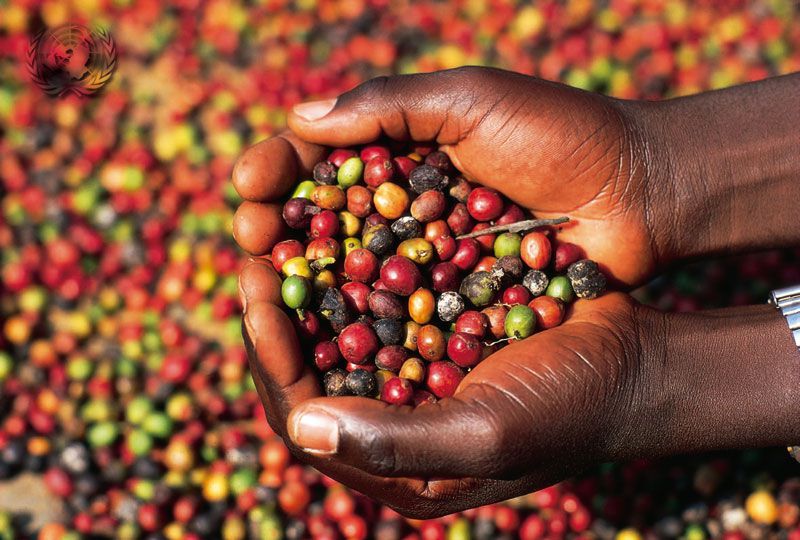
Perhaps the most underestimated impact of leaf rust is internal lot variability. Rust rarely affects all trees equally. Within the same farm, some trees may be heavily infected while others remain relatively healthy. When cherries from these trees are harvested and aggregated, the result is a lot with mixed density, inconsistent moisture behavior, and unpredictable roasting performance. Large commercial roasters have reported that such internal variability is a leading cause of batch inconsistency, even when sourcing from long-standing suppliers.
The supply risk buyers often overlook
While quality degradation is subtle, the supply risks associated with coffee leaf rust are more visible, though often misunderstood.
In the short term, severe rust outbreaks can reduce exportable volumes by 20–30% within a single harvest cycle, forcing exporters to blend more aggressively or source from secondary suppliers. For buyers operating under fixed-volume or fixed-quality contracts, this increases the likelihood of shipment delays, substitutions, or quality deviations.
More critically, leaf rust weakens coffee trees over time. Farms that struggle to manage rust effectively often experience declining productivity over multiple seasons. ICO-linked agronomic research indicates that unmanaged rust can shorten the productive lifespan of coffee trees by 5–7 years, accelerating farm renovation cycles or, in extreme cases, leading to farm abandonment.
For buyers seeking long-term sourcing relationships rather than spot purchases, this represents a structural risk that cannot be ignored.
What buyers should actually evaluate when sourcing from rust-prone origins
Buyers do not need rust-free farms. What they need is risk awareness and control.
Reliable suppliers should be able to clearly explain how leaf rust is monitored and managed at farm level. This includes the use of resistant varieties, balanced fertilization practices, and timely intervention during early infection stages. A lack of transparency in this area often signals deeper quality risks.
From a technical standpoint, buyers should pay close attention to density metrics and moisture stability, not just moisture percentage. Coffee from rust-affected farms may meet the standard 11–12% moisture range but still be unstable if structural integrity is compromised. Increasingly, professional buyers use water activity (aw) values below 0.60 as an indicator of storage and transit stability, particularly for stress-affected coffees.
Equally important is the comparison between pre-shipment and arrival samples. Coffees weakened by leaf rust tend to degrade faster during transit. Side-by-side cupping often reveals losses in aroma intensity, sweetness, and finish that were not apparent at origin. This comparison provides valuable insight into supplier consistency and risk management.
Vietnam’s position in managing coffee leaf rust risk
Vietnam is not immune to coffee leaf rust, but it offers an instructive example of how risk can be managed rather than eliminated.
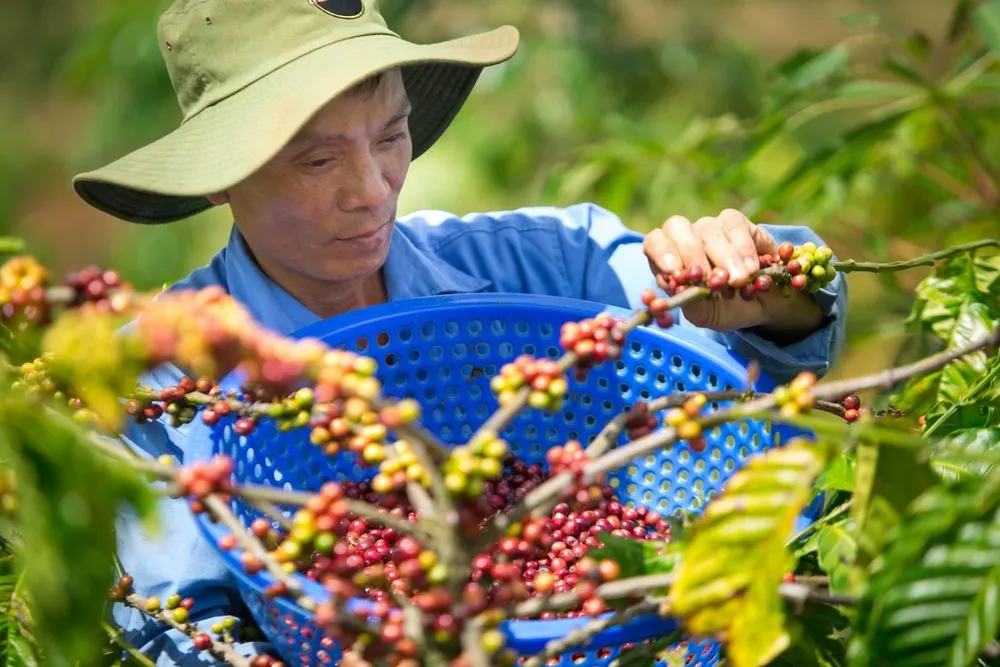
Over the past decade, Vietnam has invested heavily in farm renovation, disease monitoring, and post-harvest control, particularly in its Robusta-growing regions. National programs and private-sector initiatives have focused on improving plant health, optimizing fertilization, and stabilizing post-harvest processes. As a result, many Vietnamese producers are able to mitigate the quality and supply impacts of rust more effectively than in regions with less coordinated infrastructure.
For buyers, this means Vietnam increasingly represents a controlled-risk origin, especially for commercial and premium-commercial segments where consistency and scalability are critical.
How Hello 5 Coffee manages quality risk beyond the farm
At Hello 5 Coffee, coffee leaf rust is approached not simply as a farming issue, but as a quality and sourcing risk that must be managed throughout the supply chain.
By working closely with farming and processing partners, Hello 5 Coffee prioritizes lots from farms with active disease management practices. Each lot is evaluated not only for visual grade, but also for density consistency and moisture stability before export. Clear crop-year and lot-level traceability further ensures that buyers understand exactly what they are sourcing.
This approach allows global buyers to source coffee from Vietnam with greater confidence, even as climate pressure and disease risk increase worldwide.
Coffee leaf rust is no longer a distant agronomic concern. It is a strategic factor that influences quality consistency, supply reliability, and long-term sourcing decisions.
Buyers who understand how leaf rust affects coffee beyond yield statistics are better positioned to manage risk and protect product quality. In today’s global coffee market, informed sourcing begins with understanding what happens at origin, long before coffee reaches the port.
For buyers seeking transparent, quality-driven sourcing partners, managing these risks is not optional. It is the foundation of sustainable coffee supply.
