
If you are a coffee lover, you have probably heard of the term coffee bean belt. This is a special geographical area that produces most of the world’s highest quality coffee beans. So what is the coffee bean belt and why is it so important? Let’s find out in detail in this article.
What is the coffee bean belt?
Coffee bean belt, also known as the world’s coffee belt, is a geographical area stretching around the Earth’s equator. This belt lies between 25 degrees north latitude and 30 degrees south latitude, passing through more than 70 countries across three continents: Africa, Asia and Latin America.
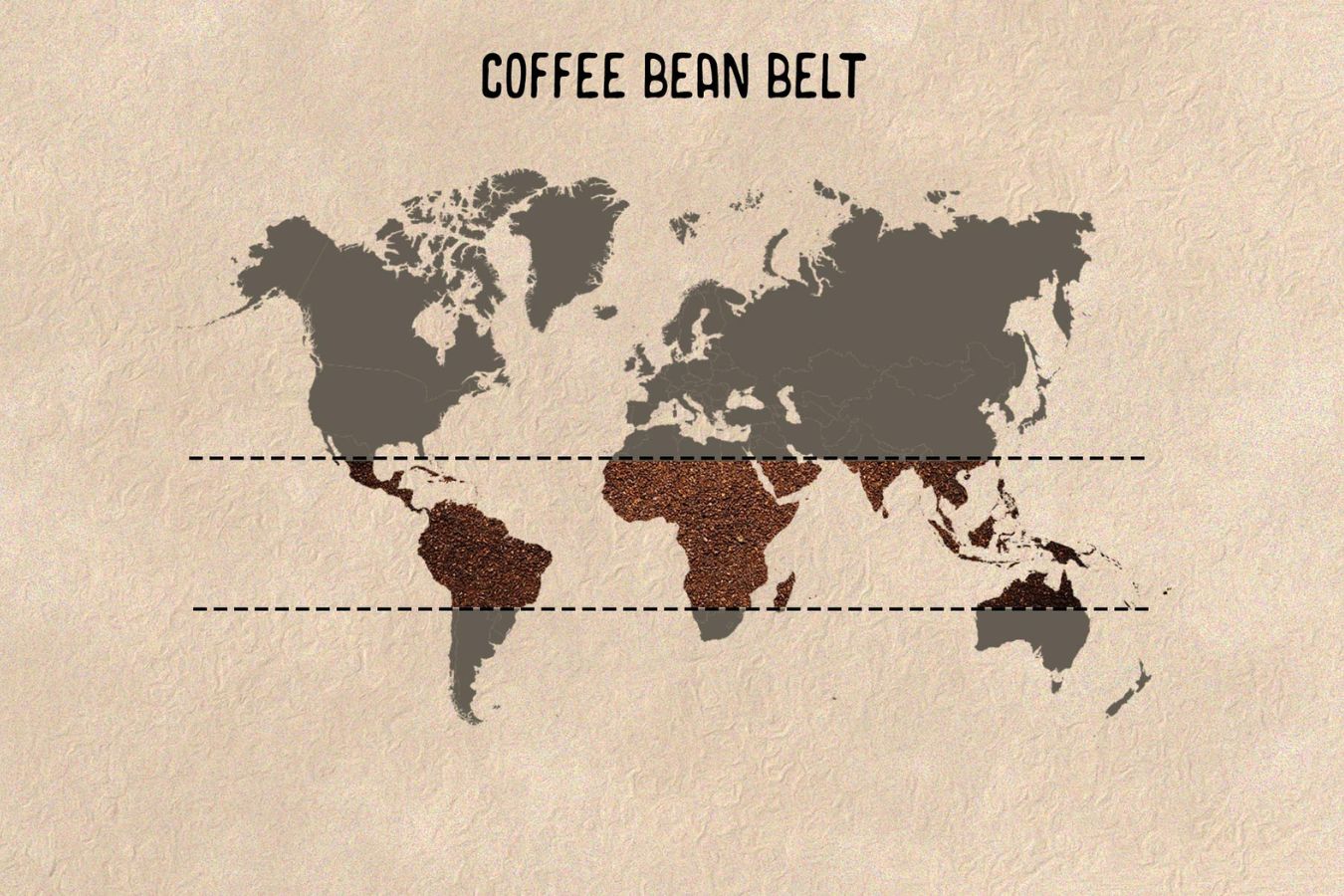
This is where the most ideal climate and terrain conditions exist for coffee plants to thrive. This term is widely used in the coffee industry to refer to the main coffee producing regions in the world.
Why does coffee only grow well in the coffee bean belt?
The coffee plant is quite selective about its living environment. They need special natural conditions to develop and produce quality coffee beans. The coffee bean belt fully meets these requirements.
Stable tropical climate
The land in the coffee bean belt has a tropical climate with average temperatures from 15 to 24 degrees Celsius year-round. This stable temperature is very important because coffee plants cannot withstand frost or excessively high temperatures. In particular, the temperature difference between day and night helps coffee beans develop better flavor.
Suitable rainfall
Coffee plants need rainfall from 1,500 to 2,500mm per year. This amount of water helps the plant grow well and the coffee fruit ripen evenly. In the coffee bean belt, rainfall is usually distributed evenly throughout the year or has a distinct rainy season, creating favorable conditions for plant development.
Suitable altitude
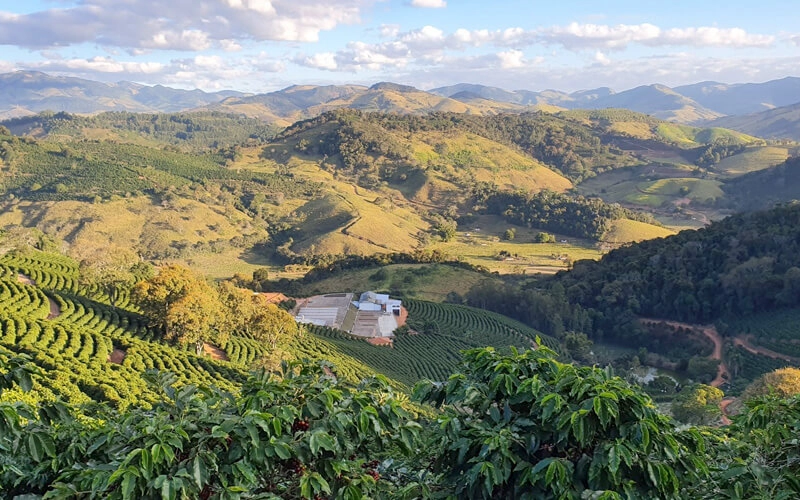
Most high-quality coffee growing areas are located at altitudes from 600m to 2,000m above sea level. This altitude brings cooler temperatures, helping coffee fruit ripen slowly and accumulate more nutrients. This is also why coffee grown at high altitudes often has more complex and delicious flavors.
Nutrient-rich soil
Many areas in the coffee bean belt have volcanic soil rich in minerals, providing abundant nutrients for coffee plants. The soil needs to be loose, well-drained and have a pH of 6 to 6.5 for the plant to develop best.
Main regions in the coffee bean belt
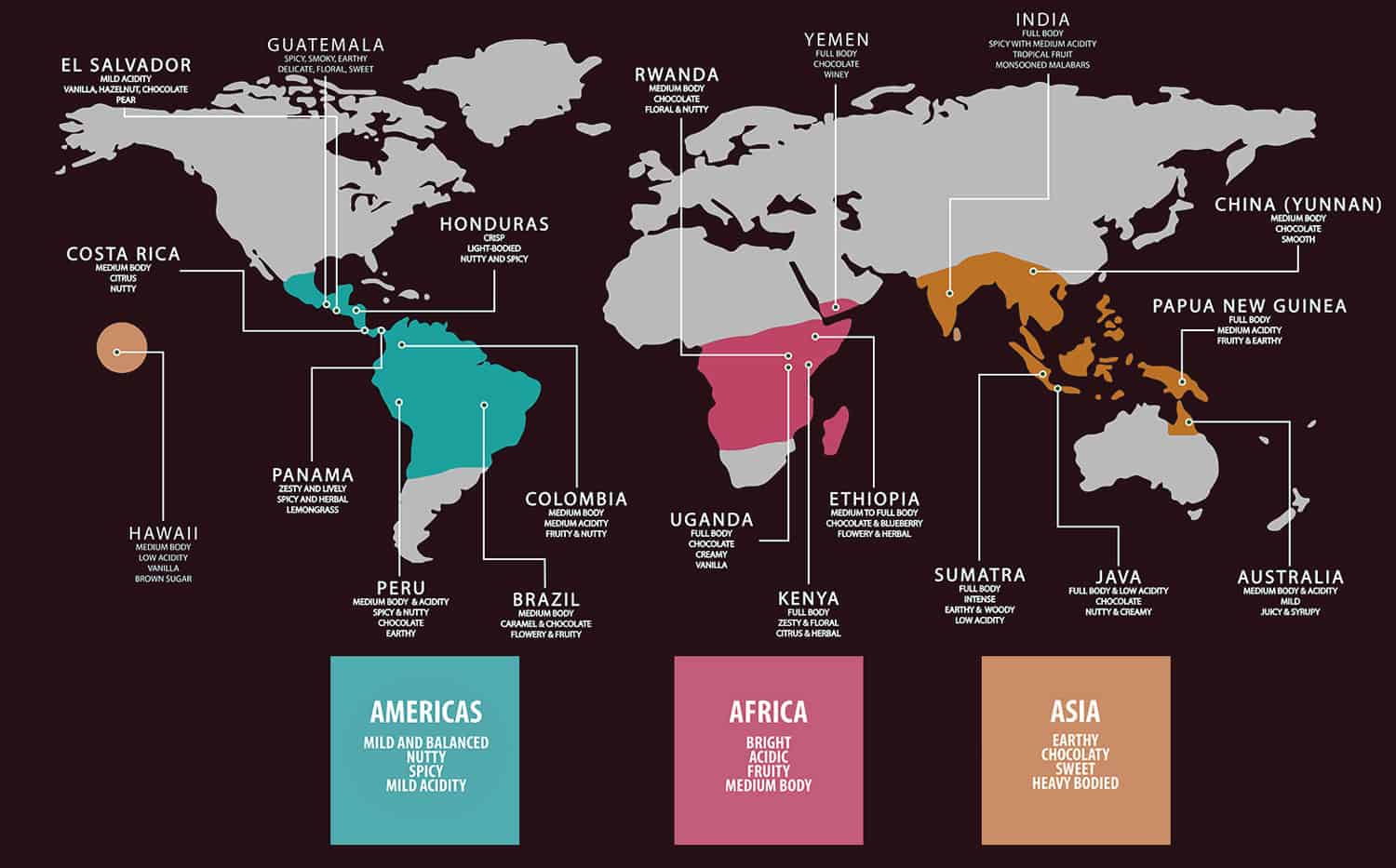
The coffee bean belt is divided into three main regions, each with its own characteristics in terms of flavor and cultivation methods.
Latin America
This is the world’s largest coffee producing region, accounting for about 60% of global production. Famous countries include:
- Brazil – The world’s largest coffee producing country, famous for arabica coffee with nutty and chocolate flavors. Brazil produces both high-quality coffee and commercial coffee.
- Colombia – Famous for premium arabica coffee, with balanced flavor, natural sweetness and moderate acidity. Colombian coffee is usually grown on high mountain slopes.
- Costa Rica – Specializes in producing high-quality arabica coffee with bright flavor, clean acidity and fruity aroma. The volcanic soil here creates unique characteristics for coffee.
In addition, there are Peru, Guatemala, Honduras, Nicaragua and many other countries that also produce high-quality coffee.
Africa
Africa is the cradle of coffee, where people first discovered the coffee plant in Ethiopia. This region accounts for about 12% of the world’s coffee production.
- Ethiopia – The homeland of arabica coffee with thousands of natural coffee varieties. Ethiopian coffee has a unique flavor with floral, fruity and wine notes.
- Kenya – Produces premium arabica coffee with pronounced acidity, complex flavor and long finish. Kenyan coffee is often ranked among the best specialty coffees in the world.
- Tanzania, Uganda, Rwanda – These countries are also developing strongly in the specialty coffee industry with unique coffee varieties.
Asia – Pacific
This region accounts for about 25% of global coffee production, famous for robusta coffee.
- Vietnam – The world’s second largest coffee producing country, leading in robusta coffee production. Vietnamese coffee has a strong bitter taste, high caffeine content and is often used in phin filter coffee or instant coffee.
- Indonesia – Famous for special coffees such as Sumatra, Java and Sulawesi. Indonesian coffee has thick body, earthy taste and distinctive flavor.
- India – Produces both arabica and robusta, characterized by an intercropping system under tall tree canopy. Indian coffee has a smooth taste and spicy aroma.
The difference between arabica and robusta in the coffee bean belt
In the coffee bean belt, the two main types of coffee grown are arabica and robusta, each with its own growing areas and characteristics.
- Arabica coffee accounts for 60-70% of world production, usually grown at altitudes from 800m to 2,000m. Arabica has delicate, complex flavor with high acidity and natural sweetness. This type of coffee is popular in Latin America and East Africa.
- Robusta coffee accounts for 30-40% of production, usually grown at lower altitudes from 200m to 800m. Robusta has a strong bitter taste, caffeine content twice that of arabica and is easier to grow. This type is popular in Southeast Asia and West Africa.
Impact of climate change on the coffee bean belt
Climate change is creating major challenges for the coffee bean belt. Rising temperatures, uneven rainfall and increasing pests are seriously affecting coffee production.
Many studies show that by 2050, the area of land suitable for growing coffee could decrease by up to 50%. This forces farmers to move growing areas higher or look for heat-resistant coffee varieties.
Sustainability programs and smart farming are being implemented to protect the coffee bean belt. Planting shade trees, using organic fertilizers and efficient water management are helping farmers adapt to climate change.
Significance of the coffee bean belt for consumers
Understanding the coffee bean belt helps you know how to choose coffee that suits your taste. If you like coffee with bright acidity and fruity flavor, choose coffee from Ethiopia or Kenya. If you prefer strong bitter taste and thick body, coffee from Vietnam or Indonesia will be more suitable.
Each region in the coffee bean belt creates its own characteristics, making the coffee world rich and diverse. This is also why we can enjoy hundreds of different types of coffee from around the world.
The coffee bean belt is not just a simple geographical area but is the heart of the global coffee industry. With special natural conditions, this belt has been and is providing the highest quality coffee beans for billions of people around the world.
Protecting and sustainably developing the coffee bean belt is important not only for coffee makers but also for all those who love this wonderful drink. Every cup of coffee you enjoy carries within it the story of the land, people and nature of the coffee bean belt.
